

One week of fantasy football data can give us clues, but two weeks can hopefully start to give us some trends. With Week 2 over, we can now compare usage and opportunities to see which Week 1 roles are sticking, which are changing, and where injuries have opened the door for new fantasy contributors. Let’s dig into the most important usage trends from all 32 NFL teams.
This weekly piece will look at those trends and make recommendations for players who might be worth rostering or starting in our fantasy lineups. For Week 2, we will dive into some ambiguous and uncertain situations that developed over the last two weeks to see how different roles played out.
If you have interesting usage notes, feel free to reach out to me on Twitter/X (@CableBoxScore) and let me know. Let’s dive into the 2026 NFL Week 2 usage!
More Fantasy Football Fun!: | Sneaky Starts | Fantasy Football Waiver Wire | Weekly Sleepers & Streamers | Starts & Sits | Skrip’s Week Winners | Players You Can Drop | NFL DFS | NFL Player Props | IDP Analysis | Bold Predictions | Re-Draft Trade Targets | Survivor Picks | NFL Injury Report | Dynasty Trade Targets | Dynasty Risers and Fallers | Weekly Rankings | Game Previews
NFL Week 2 Usage Trends
ARIZONA CARDINALS
The concerns about Jeremiyah Love’s workload aren’t going away. Love played just 40% of the snaps compared to 64% for Tyler Allgeier, and Allgeier has now out-snapped him in both games. Love did get nine carries and three targets on his limited playing time, but Arizona still isn’t treating its rookie like a lead back.
ATLANTA FALCONS
Don’t overreact to Bijan Robinson playing only 51% of the snaps. Atlanta pulled its starters during the blowout, and Robinson still handled 16 carries and four targets before his day ended. Something that’s more relevant: his 42% targets per route run through two games is an elite receiving profile for a running back. We will see if that changes with Michael Penix Jr. next week.
BALTIMORE RAVENS
Zay Flowers’ absence opened the door for Rashod Bateman, who responded with nine targets and 117 air yards. Mark Andrews is also quietly commanding 25% of Baltimore’s targets through two games, making his strong start look considerably more sustainable, especially with main competition Isaiah Likely out of town.
BUFFALO BILLS
Dalton Kincaid’s breakout is beginning to feel real. After an encouraging opener, Kincaid again commanded a major piece of Buffalo’s passing game in Week 2 and is up to a 30.8% targets-per-route-run rate through two games. That’s the kind of usage that can finally push Kincaid into the upper tier of fantasy tight ends.
On the wide receiver side, we had interesting data with DJ Moore leaving very early. Keon Coleman far and away played the most snaps of all the wide receivers with 74%. No other WR was over 49%.
CAROLINA PANTHERS
Jonathon Brooks’ groin injury messed up what was becoming a more interesting backfield split. Brooks played 33% of the snaps after seeing a smaller role in Week 1, while Chuba Hubbard was at 62%. If Brooks’ injury proves minor, this may be moving toward more of a committee than Hubbard managers would like. But we don’t know yet if Brooks will miss time going forward.
CHICAGO BEARS
Luther Burden III saw seven targets, but the playing time on the field continues to be the bigger story. Burden played just 57% of the snaps, while Rome Odunze remained the clear full-time receiver. Khalif Raymond out-snapped Burden 62% to 57%. The targets are encouraging, but Burden needs the snap and route numbers to start moving in the same direction before we can call this a true breakout.
CINCINNATI BENGALS
Chase Brown’s fantasy production wasn’t spectacular, but his usage absolutely was. Brown played 69% of the snaps, handled 20 of Cincinnati’s 22 running back carries and drew five targets. Samaje Perine remains involved on passing downs, but 25 opportunities is exactly the kind of workload we wanted to see from this second-round back.
CLEVELAND BROWNS
Denzel Boston’s second straight productive game came with increasingly convincing usage. He led Cleveland’s receivers in routes, targets, and air yards, drawing seven targets and now accounts for 52% of the Browns’ air yards through two games. Jerry Jeudy, meanwhile, received just one target on 24 routes and appears to be out of this rotation.
DALLAS COWBOYS
Jake Ferguson scored two big touchdowns, but his underlying role didn’t really change. His lower snap and route shares were largely the result of playing only 36% of the fourth-quarter snaps with Dallas comfortably ahead. This looks more like a normal Ferguson workload that happened to produce two touchdowns than a suddenly expanded role.
DENVER BRONCOS
Jonah Coleman now has our attention after the Denver running back situation got worse. With RJ Harvey inactive and J.K. Dobbins leaving with a hamstring injury, Coleman played 42% of the snaps and turned 10 carries and three targets into 58 total yards and a touchdown. His Week 3 value will depend heavily on the health of Dobbins and Harvey, so pay close attention.
DETROIT LIONS
Can Jahmyr Gibbs survive this kind of massive workload? Jahmyr Gibbs played 82% of Detroit’s offensive snaps after the Lions had used a more balanced backfield in Week 1. He also ran 31 routes and drew eight targets, while Sione Vaki played only 18% of the snaps. If that kind of separation continues, Gibbs could be headed for 400 touches if he stays healthy.
GREEN BAY PACKERS
Tucker Kraft went from playing 66% of the snaps in Week 1 to 98% in Week 2. He only saw three targets, but he also had two nine-yard receptions erased by penalties. The fantasy production hasn’t caught up yet, but a tight end playing every snap and running a route on 78% of the team’s dropbacks should be fine. Jordan Love just needs to step it up a little in the passing game.
HOUSTON TEXANS
Dalton Schultz’s monster game wasn’t simply the product of a couple of big plays. Houston threw 56 passes, and Schultz ran 45 routes while drawing 14 targets. He now owns a 25% target share through two weeks, which makes him one of the more interesting Week 3 streamers, especially if Nico Collins misses one more game.
INDIANAPOLIS COLTS
With Alec Pierce leaving with a heel injury after playing just 26% of snaps against the Chiefs, it was Laquon Treadwell who filled the gap both in terms of snaps and in terms of plays down the field. Treadwell saw three targets in this game and caught all of them for 61 yards, good for more than 20 yards per reception. Pierce will be going on IR, so Treadwell might have deep-league value now.
JACKSONVILLE JAGUARS
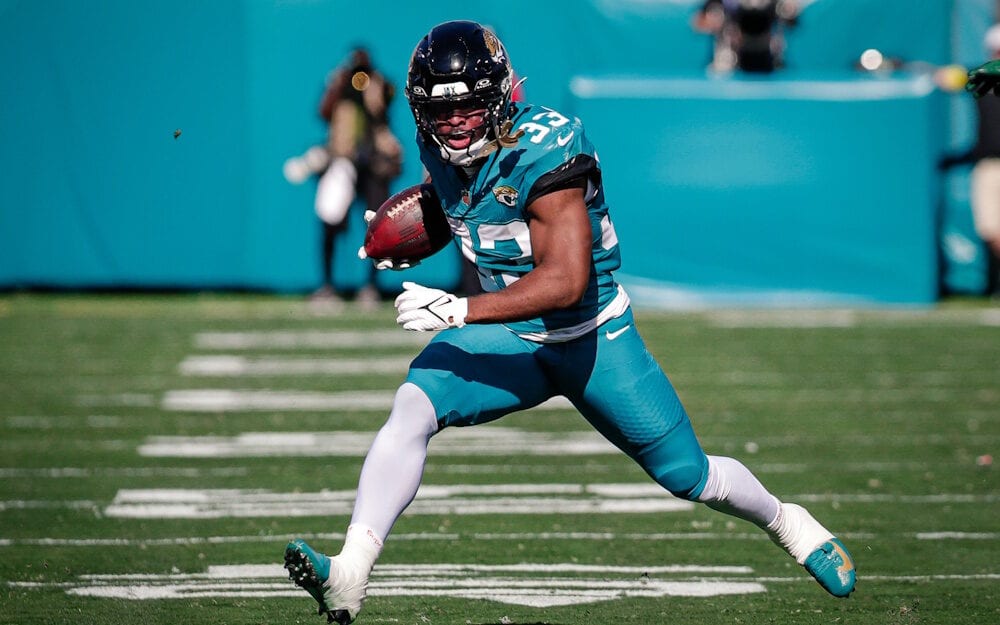
Bhayshul Tuten played 51% of snaps after playing 49% of the snaps in Week 1, so his playing time didn’t actually increase much. What matters is what Jacksonville is doing with those snaps. Tuten out-carried Chris Rodriguez Jr. 13-6 and now looks firmly established as the primary early-down runner, while LeQuint Allen Jr. handles some of the passing-down work along with Tuten.
KANSAS CITY CHIEFS
Kenneth Walker III is getting much more receiving work than we were accustomed to seeing in Seattle (since we were used to him being underutilized there). Walker played 82% of the snaps against Indianapolis, handled 23 carries and drew 10 targets, catching six for 61 yards. Through two games, he owns a 24% target share, which dramatically raises his fantasy ceiling to a top-five player if that continues with Patrick Mahomes.
LAS VEGAS RAIDERS
The efficiency hasn’t been there yet for Ashton Jeanty (much like large portions of 2025), but the opportunity certainly has. Jeanty played 82% of the snaps, handled 21 carries and drew seven targets against the Chargers. A running back getting 25 touches on more than 80% of his team’s snaps is getting elite volume. And the Raiders are staying in games through two weeks, which is a great sign for Jeanty.
LOS ANGELES CHARGERS
Omarion Hampton’s workload and his fantasy production took another step forward in Week 2. He played 63% of the snaps and handled 23 carries for 94 yards and a touchdown. According to Next Gen Stats, the Chargers finished with an extremely run-heavy -16.1% pass rate over expectation. Hampton’s rushing volume could go through the roof if that trend continues.
LOS ANGELES RAMS
With no Puka Nacua, it was purely the Davante Adams and Terrance Ferguson show through the air. Adams had 10 targets (8-195-2) while Ferguson checked in with nine targets and went 6-54-1. No other player on the Rams received more than two targets. Notably, Ferguson’s nine targets were six more than all other Rams tight ends combined. He appears to be emerging as a key player in this offense.
On the run game, both Kyren Williams and Blake Corum got 12 carries, but Williams likely would have had more if not for the blowout.
MIAMI DOLPHINS
Malik Washington continues to separate himself in Miami’s rebuilt receiver room. He played 73% of the snaps in Week 2, tied Caleb Douglas with a team-high 21 routes, and led the wide receivers with five targets. Washington now owns a 26% target share through two games, making him the most interesting Dolphins receiver to monitor going forward. Caleb Douglas regressed from five receptions and 94 yards in Week 1 to two catches for 19 yards in Week 2.
MINNESOTA VIKINGS
Aaron Jones’ Week 2 usage exploded with Jordan Mason on the IR with a thumb injury. Jones played 81% of the snaps and handled 23 of Minnesota’s 25 running back carries, rushing for 105 yards. The Vikings don’t likely trust DeeJay Dallas with a big workload, so unless they bring in another running back, Jones should get a lot of run for the Vikings in the next three games.
NEW ENGLAND PATRIOTS
TreVeyon Henderson’s return from an ankle injury immediately shook up the Patriots’ backfield. After Rhamondre Stevenson lost a fumble on the opening drive, Henderson took over much of the early-down work and finished with 60% of the snaps, 16 carries and 76 yards plus a touchdown. Stevenson still handled some passing-down work, but Henderson could be on the path to a much bigger role.
NEW ORLEANS SAINTS
Alvin Kamara returned in Week 2, much to the annoyance of Travis Etienne Jr. managers. But this is not the old Alvin Kamara. He played just 29% of the snaps, compared to 54% for Travis Etienne and 29% for CJ Donaldson. Kamara managed 14 opportunities on only 19 snaps, but he only got 22 yards on 14 carries. If Etienne doesn’t start getting more work with that kind of efficiency from Kamara, it will be a real problem for fantasy managers.
NEW YORK GIANTS
It doesn’t matter who is playing quarterback. Isaiah Likely is one of the most heavily-utilized tight ends in the league through two weeks. He has 18 total targets and now has 111 targets and two touchdowns through two games. If Jaxson Dart is out for any period of time, expect Likely to be Jameis Winston’s safety valve and earn a boatload of targets.
NEW YORK JETS
Adonai Mitchell might be the most interesting Jets story from Week 2. He played 82% of the snaps, ran a route on 78% of the dropbacks, and earned 12 targets and 178 air yards. Garrett Wilson remains the No. 1 option, but Mitchell’s Week 2 opportunity was definitely worth monitoring, especially if the Jets are going to continue to be competitive in games this season.
PHILADELPHIA EAGLES
Saquon Barkley’s stinger gave us an opportunity to see how Philadelphia might divide the backfield without him. Will Shipley played 51% of the snaps and ran 24 routes, while Tank Bigsby handled 13 carries and scored a touchdown on 34% of snaps. Rather than one direct Barkley replacement, this looks like it could become a situational split if he misses time. I would probably trust Bigsby in that scenario.
PITTSBURGH STEELERS
Rico Dowdle’s toe injury allowed Jaylen Warren to play more, and Warren ended up playing 72% of Pittsburgh’s offensive snaps. He handled 11 carries and four targets while running 24 routes. That’s considerably more playing time than Warren received in Week 1 and would make him extremely interesting if Dowdle is unable to play in Week 3. The offense as a whole is a complete mess, but Warren could at least get a lot of volume.
SAN FRANCISCO 49ERS
After what happened in the opening game in Australia for the 49ers, there was concern about how they were using their running backs. Christian McCaffrey’s final 55% snap share in Week 2 is misleading because San Francisco was blowing out Miami. In the first half, McCaffrey played 80% of the snaps and handled eight of the 10 running back touches. He also scored twice, so all is well for CMC managers. The more interesting development may be George Kittle, whose snap and route participation both increased from Week 1 as he works his way back from injury.
SEATTLE SEAHAWKS
Jadarian Price’s mid-game injury created an immediate opportunity for Emanuel Wilson. Price had been leading the backfield before leaving, but Wilson finished with 20 carries for 93 yards and handled the majority of the work afterward. Price should continue to get a lot of looks when he is healthy, but he needs to stay on the field and produce in order to win the favor of his coaches.
TAMPA BAY BUCCANEERS
Kenneth Gainwell’s managers continue to mourn. Bucky Irving’s role moved in the right direction in Week 2. Irving played 77% of the snaps and handled 17 carries compared to only two for Kenny Gainwell. Gainwell remains involved in the passing game, but this looked much more like Irving’s backfield than the Week 1 distribution did. Irving looks rejuvenated after injury concerns in the offseason.
TENNESSEE TITANS
The Titans may not be a team that scores a lot of points, but we should still pay attention to the usage. Carnell Tate had a high target share (29%), but Elic Ayomanor has emerged as a legitimate part of the offense while Calvin Ridley’s playing time has slipped. Ayomanor played 53% of snaps and had 69 receiving yards. Wan’Dale Robinson was completely MIA in this one.
WASHINGTON COMMANDERS
Rachaad White led Washington’s backfield with a 52% snap share in Week 2, up from 41% in the opener, while Jacory Croskey-Merritt fell from 49% to 37%. White’s receiving role gives him fantasy value, but Croskey-Merritt still appears to be the preferred early-down option. Because the Commanders needed to play catch-up, that may explain White’s usage here.
Data Sources: NFL Next Gen Stats, Football Guys Snap Summary, FTN Air Yards, Pro Football Reference, Team Rankings, Fantasy Points Data Suite
Make sure to check out all of our Week 3 Fantasy Football Rankings and Analysis!
Fantrax is one of the fastest-growing fantasy sites in the fantasy sports industry, and we’re not stopping anytime soon. We are the most customizable, easy-to-use, and feature-rich platform in the industry, offering the greatest fantasy experience for your dynasty, keeper, redraft, and best ball leagues. Fantasy sports doesn’t sleep, and neither does Fantrax, with seasons running 365 days a year. Take your fantasy leagues to the next level now at Fantrax.com!