

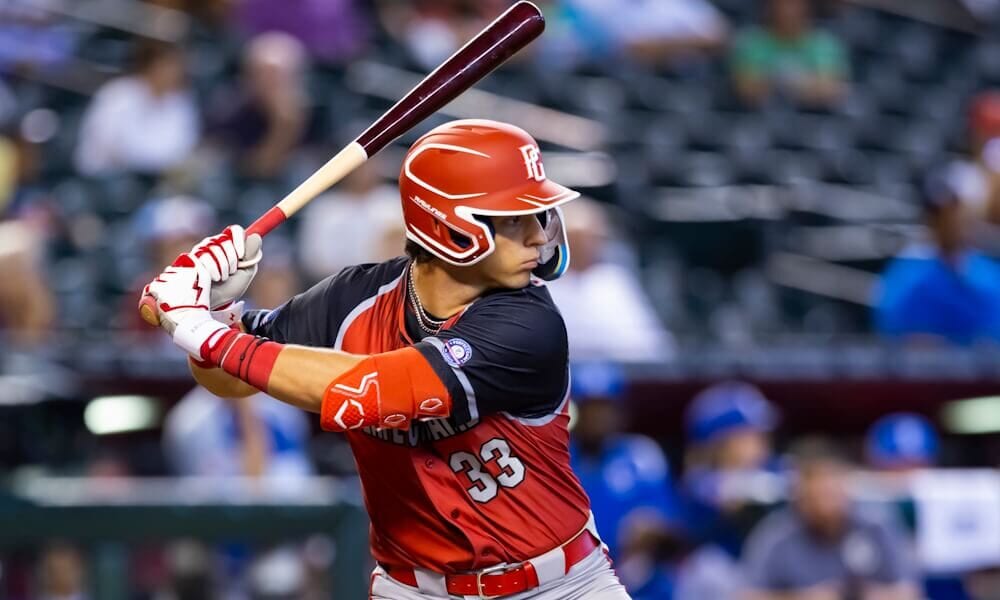
The Chicago White Sox are beginning to emerge from one of the most difficult rebuilding stretches in franchise history, and much of the organization’s direction can be traced back to Executive Vice President and General Manager Chris Getz. Rather than attempting to accelerate the process through short-term fixes, Getz and his staff have focused on rebuilding the organization from the inside out—strengthening player development, improving internal processes, adding young talent, and creating a clearer identity from the minor leagues through Chicago.
2026 Chicago White Sox Top 20 Fantasy Baseball Prospects
That approach is beginning to produce tangible results. The White Sox have assembled a much deeper collection of young players while becoming increasingly willing to give those players meaningful opportunities at the major-league level. Just as importantly, the organization has resisted sacrificing the long-term health of the farm system simply to capitalize on short-term success. That balance between development and competition has become one of the defining characteristics of the Getz era, as you’ll see in the White Sox’ Top 20 fantasy baseball prospects ahead.
The talent pipeline is also becoming considerably more interesting. Roch Cholowsky, Caleb Bonemer, Billy Carlson, Hagen Smith, and a growing collection of recent draft and international additions give Chicago prospects with legitimate upside at several different levels of the system. The 2026 draft added another significant wave of talent, while the organization has continued to emphasize individual development rather than forcing prospects toward Chicago before they are ready.
For dynasty fantasy managers, that changing environment deserves attention.
A White Sox prospect should no longer be viewed strictly through the lens of an organization rebuilding for some distant future. Chicago is beginning to connect its minor-league development pipeline directly to a competitive major-league roster, creating opportunities for young players to earn meaningful roles without necessarily being asked to carry the franchise immediately. That can be an attractive combination for dynasty purposes: opportunity, organizational patience, and an increasingly talented group developing alongside one another.
Getz has repeatedly emphasized that the ultimate objective is not simply producing one competitive season. The White Sox are attempting to build something sustainable—an organization capable of identifying talent, developing it, promoting it when ready, and eventually supplementing that young core with outside additions when the competitive window warrants it.
For dynasty managers, that makes Chicago one of the more intriguing organizations to monitor. The system now possesses legitimate high-end prospects, considerably greater depth, and a clearer pathway connecting player development to major-league opportunity. If the White Sox can continue turning that organizational progress into individual player development, several members of this system could become significant dynasty assets over the next few seasons.
So, let’s begin with our countdown of the White Sox’s top 20 prospects.
#20 — Cal Scolari | RHP (ETA 2029)
Chicago selected Scolari out of Oregon in the fifth round of the 2026 Draft, 137th overall. The 6-foot-4 right-hander gives the organization another power arm after reaching the upper 90s and showing a slider capable of generating swings and misses.
Scolari’s fantasy appeal revolves much more around strikeouts than ratios right now. His fastball/slider combination can overpower hitters, but inconsistent strike-throwing creates substantial reliever risk and could make WHIP painful during his developmental years.
For dynasty managers, he is a deep-league pitching stash rather than a priority acquisition. If Chicago can tighten the command without taking away the stuff, Scolari has enough bat-missing ability to climb considerably higher.
#19 — Landon Hodge | C (ETA 2029)
The White Sox landed Hodge in the 2025 Draft and signed him that July, adding a young left-handed-hitting catcher to their developmental pipeline. He immediately became an intriguing long-term project because catching prospects with offensive upside are always worth monitoring in deeper dynasty formats.
Hodge offers an interesting blend of contact potential and developing strength, but his fantasy value will ultimately depend upon how much offensive impact arrives as he matures. Catching development also tends to move slowly because of the defensive responsibilities involved.
He is best treated as a watch-list player outside of leagues rostering 200-plus prospects. If the power starts showing while Hodge proves he can remain behind the plate, the positional scarcity could quickly make him much more valuable.
#18 — Ryan Burrowes | INF (ETA 2028)
Chicago originally signed Burrowes as an international amateur, and his athleticism has kept him on the dynasty radar as he has moved through the system. His 2026 performance has been particularly encouraging, with speed becoming a major part of his statistical profile.
Burrowes brings the kind of fantasy-friendly versatility managers should appreciate: enough contact ability to reach base, plus running ability and double-digit homer potential. The ceiling is more everyday contributor than franchise cornerstone, but stolen bases give him an avenue to outperform traditional prospect rankings.
The key is whether his bat becomes dangerous enough for regular MLB playing time. In deeper leagues, Burrowes is an underrated stash whose speed could translate into sneaky five-category usefulness.
#17 — Mathias LaCombe | RHP (ETA 2028)
The White Sox drafted LaCombe out of Cochise College in the 12th round in 2023, making him just the second native of France ever selected in the MLB Draft. Injuries delayed his professional debut, but his raw arsenal has kept him interesting.
LaCombe can miss bats with a lively mid-90s fastball and sweeping slider, while his splitter provides another weapon when properly located. The issue for fantasy managers is command: too many poorly executed pitches could push him away from a starter’s workload.
There is legitimate strikeout upside if everything clicks. Dynasty managers in pitching-heavy formats should monitor him closely because the difference between a mid-rotation starter and power reliever will largely come down to control.
#16 — Eric Segura | RHP (ETA 2029)
Chicago selected Segura from Oregon State in the fourth round of the 2026 Draft, 105th overall. He arrived after an excellent junior season and gives the organization a relatively polished college arm with a three-pitch starter’s foundation.
Segura works in the low-to-mid 90s and pairs his fastball with a sweeping slider and changeup. His repertoire should generate ground balls and enough strikeouts to remain interesting, although inconsistent command could eventually steer him toward relief.
For dynasty purposes, Segura offers more floor than spectacular ceiling. He becomes considerably more interesting if his velocity takes another step because improved fastball quality could allow the slider to become a genuine strikeout weapon.
#15 — Kyle Casteel | RHP (ETA 2030)
The White Sox made Casteel one of their more aggressive Day 3 investments by taking the prep right-hander in the 11th round of the 2026 Draft, 315th overall. Chicago’s willingness to bring him into the organization rather than lose him to college makes him a particularly intriguing development arm.
Casteel combines projectable pitching traits with a repertoire that already gives him multiple ways to attack hitters. His changeup and strike-throwing are advanced enough to dream about starting, while additional physical development could increase the overall quality of his arsenal.
He is several years away, making him a stash primarily for very deep dynasty leagues. Still, prep pitchers who combine projection with usable command can make significant jumps, and Casteel has the ingredients to become one of Chicago’s better pitching sleepers.
#14 — Alex Weingartner | OF (ETA 2030)
Chicago drafted Weingartner from St. Augustine Prep in New Jersey in the sixth round of the 2026 Draft and paid him well above slot to turn professional. A former two-way standout, the White Sox are developing his enormous athleticism in the outfield.
This is a fascinating fantasy toolkit. Weingartner possesses exceptional speed, a huge throwing arm, explosive bat speed, and enough raw power to envision a future power/speed contributor if his hitting ability catches up.
The hit tool is the obvious gamble, which makes him a classic high-risk FYPD target. If he demonstrates that he can handle quality professional pitching, his combination of homers and stolen bases could send his dynasty stock soaring.
#13 — George Wolkow | OF (ETA 2028)
The White Sox drafted the massive 6-foot-7 Wolkow in the seventh round in 2023, signing him out of high school rather than allowing him to reach South Carolina. Few players in the system can match his sheer physical upside.
Wolkow’s left-handed raw power is enormous, and 25-plus homer seasons are imaginable if he makes enough contact. That final qualifier is everything: his long levers create exploitable holes, giving him one of the widest possible fantasy outcomes in the organization.
He is exactly the type of prospect worth betting on when chasing ceiling rather than safety. Improved contact could turn Wolkow into a middle-of-the-order fantasy asset, while continued swing-and-miss issues could prevent the power from ever fully translating.
#12 — Kyle Lodise | SS/2B (ETA 2028)
Chicago selected Lodise in the 2025 Draft and signed him that July, adding an athletic college infielder who quickly began pushing his way through the lower levels. His combination of polish and usable tools makes him especially interesting for fantasy managers looking beyond louder names.
Lodise does not need one carrying offensive tool because his value comes from doing several things well. He can contribute some power, steal bases, and handle multiple infield positions, giving him several paths toward everyday at-bats.
There may not be superstar upside here, but dynasty leagues are won with productive secondary pieces too. A future featuring double-digit homers and steals with multi-position eligibility would make Lodise surprisingly useful.
#11 — Pierce George | RHP (ETA 2027)
The White Sox added George by selecting him in the thirteenth round of the 2024 Draft and have developed the towering 6-foot-6 right-hander into one of the hardest throwers in their system. His progress has pushed him to Double-A and significantly shortened the distance between his electric arsenal and Chicago.
George’s calling card is premium velocity, with MLB Pipeline currently grading his fastball as the best in the organization. The power arsenal can pile up strikeouts, although his ultimate fantasy role will depend on whether the command and secondary pitches are consistent enough to start.
That starter-versus-reliever question suppresses his dynasty ranking, but the upside is considerable. Even in relief, George has the stuff to become a high-leverage arm; if he starts, his strikeout ceiling makes him substantially more valuable.
#10 — Colby Shelton | 2B/SS (ETA 2028)
The White Sox selected Shelton out of Florida in the sixth round of the 2025 Draft, 166th overall, after he established a long track record of collegiate power. He has since moved aggressively through the system and reached Double-A in 2026.
Shelton’s left-handed power is his fantasy calling card, but the encouraging development is that he has become more than an all-or-nothing slugger. Better swing decisions give him a chance to pair legitimate home-run production with a playable average and useful on-base percentages.
He is an appealing dynasty target because the path to fantasy relevance is uncomplicated: hit enough to access the power. A middle-infield eligible bat capable of approaching 20-plus homers carries considerable value even without elite speed.
#9 — Javier Mogollon | 2B/SS (ETA 2028)
Chicago signed Mogollon out of Venezuela for only $75,000 during the 2023 international period, and he has developed into one of the better finds from that class. His combination of explosive athleticism and surprising pop makes him much more interesting than his modest frame suggests.
Mogollon swings aggressively and can drive the baseball with authority, but his approach also creates swing-and-miss concerns. What dynasty managers will love is the speed: he has shown the ability and willingness to steal bases at a high rate.
That creates genuine 15-homer/25-steal type upside if his hit tool survives against upper-level pitching. The profile carries risk, but fantasy managers should embrace that volatility because Mogollon’s power-speed combination gives him an exciting ceiling.
#8 — William Bergolla Jr. | SS/2B (ETA 2027)
Originally signed by Philadelphia out of Venezuela for $2.05 million in 2022, Bergolla came to Chicago in the July 2024 Tanner Banks trade. Since then, his advanced bat-to-ball ability has made him one of the safest position-player prospects in the organization.
Bergolla’s game begins with contact. MLB Pipeline gives him a 60-hit tool and 60 speed, creating a potential batting-average and stolen-base contributor even though his power projects as well below average.
His fantasy ceiling is therefore format-dependent: he is more attractive in deeper leagues and formats that reward average or OBP than in homer-heavy scoring systems. Still, proximity, defensive versatility and bat-to-ball skill give him an excellent chance of becoming a useful major leaguer.
#7 — Joey Volchko | RHP (ETA 2029)
Chicago selected Volchko from Georgia in the third round of the 2026 Draft, 77th overall, making him the first major pitching investment of its enormous draft class. The White Sox bet on pure stuff that can look overwhelming when everything is synchronized.
Volchko can reach the upper 90s and unleash a hard slider capable of missing bats in bunches. The fantasy upside is substantial because that combination could generate big strikeout totals, but shaky command creates an equally substantial chance that he eventually lands in the bullpen.
He is a ceiling play for dynasty managers who can tolerate pitching risk. If Chicago can get his delivery and strike-throwing under control, Volchko has the arsenal to develop into a high-strikeout starter rather than simply a late-inning weapon.
#6 — Jaden Fauske | OF (ETA 2029)
The White Sox selected Fauske in the 2025 Draft and signed him that July, adding a polished young left-handed hitter to the organization. He quickly emerged as one of Chicago’s more intriguing young offensive prospects and has continued building his stock during his first full professional season.
Fauske’s attraction in dynasty is balance rather than one cartoonishly loud tool. His advanced offensive instincts, projectable frame, and athleticism create the possibility of a hitter who contributes batting average, on-base ability, power, and some speed.
That well-rounded profile gives him a relatively high fantasy floor for a player this young. If additional strength turns some of his doubles into home runs, Fauske could develop into an extremely valuable five-category outfielder.
#5 — Landon Thome | SS (ETA 2030)
Yes, that Thome. Chicago selected Jim Thome’s son with the 34th overall pick in the 2026 Draft, using its Competitive Balance Round A selection to keep the Illinois prep star close to home. He immediately became one of the most recognizable names in the system.
The younger Thome should be evaluated on his own merits, however, and there is plenty to like. His left-handed bat combines advanced offensive feel with emerging power, while his youth leaves significant room for physical development.
Dynasty managers should resist expecting his father’s 600-homer résumé, but the offensive ceiling is legitimate. Thome could eventually grow into a middle-of-the-order infielder, making him one of Chicago’s best long-range FYPD investments.
#4 — Cole Prosek | 2B (ETA 2030)
Chicago selected Prosek from Magnolia Heights High School in Mississippi with the 41st overall pick in the second round of the 2026 Draft, then went over slot to sign him. His polished left-handed bat was one of the centerpieces of the organization’s aggressive draft strategy.
Prosek combines natural hitting ability with enough strength to project 20-plus home-run production. His dynasty intrigue gets another boost from the possibility that he develops behind the plate, although catching could also slow his trip through the minors.
For fantasy purposes, the bat is the reason to invest regardless of where he ultimately plays. If Prosek becomes a catcher without sacrificing offense, his positional value could explode; at third base, the hit/power combination still gives him an everyday ceiling.
#3 — Billy Carlson | SS (ETA 2029)
The White Sox selected Carlson 10th overall in the first round of the 2025 Draft, making the California prep shortstop one of the foundational pieces of their rebuilding farm system. His exceptional defensive tools should give his bat plenty of time to develop.
Carlson’s fantasy upside comes from the possibility that an already athletic shortstop grows into more offensive impact. His arm and defense are elite-level tools, while developing strength gives him a chance to produce useful power and speed rather than becoming merely a glove-first regular. MLB Pipeline currently grades both his arm and defense at 70.
There is still significant developmental distance here, but Carlson has a valuable safety net because his glove should keep him at shortstop. If the bat reaches its upper range, he could become a 20-homer, double-digit-steal fantasy shortstop with excellent job security.
#2 — Caleb Bonemer | 3B/SS (ETA 2027)
Chicago drafted Bonemer out of Michigan’s Okemos High School in the second round of the 2024 Draft, and his offensive development has since turned him into one of baseball’s premier young infield prospects. By 2026, he was already punishing Double-A pitching at just 20 years old.
Bonemer offers exactly what dynasty managers chase: impact power without being completely dependent upon home runs for value. His strength, patience, and athleticism give him a chance to contribute across categories, and he has shown enough speed to add stolen bases rather than clogging a fantasy roster.
There is some swing-and-miss to monitor, but the offensive ceiling is enormous. A future producing 25-30 homers with useful steals and strong run production is realistic enough to make Bonemer one of the best dynasty assets in the White Sox system.
#1 — Roch Cholowsky | SS (ETA 2027)
The White Sox made Cholowsky the centerpiece of their next wave by selecting the UCLA shortstop No. 1 overall in the 2026 MLB Draft. Chicago immediately challenged the polished college star with High-A competition, reflecting how quickly his path could move.
Cholowsky is the complete dynasty package: premium defensive security at shortstop, impact power, enough speed to contribute stolen bases, and an offensive approach advanced enough to move quickly. MLB Pipeline already lists him as Chicago’s No. 1 prospect with a 2027 ETA.
He has the best combination of ceiling, floor, and proximity of anyone on this list. Dynasty managers can realistically dream of a middle-of-the-order shortstop producing 25-plus homers, strong counting stats, and useful steals, giving Cholowsky legitimate future top-tier fantasy shortstop upside.
Final Thoughts
The White Sox system is becoming much more compelling for dynasty managers because it now combines high-end upside, improving depth, and clearer paths to major-league opportunity. Chicago’s patient, development-first approach gives this group a chance to mature without sacrificing the organization’s long-term outlook.
At the top, Roch Cholowsky and Caleb Bonemer provide legitimate cornerstone potential, while Billy Carlson, Cole Prosek, Landon Thome and Jaden Fauske give the system another wave of intriguing position-player upside. Cholowsky stands out for having the strongest blend of ceiling, floor, and proximity.
Overall, this is a farm system dynasty managers should be actively monitoring rather than merely stashing. The combination of opportunity, organizational patience, and an increasingly talented young core makes Chicago a much more fertile source of future fantasy value than it has been in recent years.
Fantrax is one of the fastest-growing fantasy sites in the fantasy sports industry, and we’re not stopping anytime soon. We are the most customizable, easy-to-use, and feature-rich platform in the industry, offering the greatest fantasy experience for your dynasty, keeper, redraft, and best ball leagues. Fantasy sports doesn’t sleep, and neither does Fantrax, with seasons running 365 days a year. Take your fantasy leagues to the next level now at Fantrax.com!