
Identifying second-half breakouts from the previous baseball season can be a useful exercise when targeting players for the current draft season. At first glance, a meh 2025 stat line for a player might seem unappealing. But if that player made meaningful skill gains in the back half of the season, it’s worth digging into. While second-half breakouts are by no means a lock for success the following year, they can provide excellent draft-day value. In this article, we look at some second-half hitting breakouts who could provide sneaky value in 2026.
Second-Half Hitting Breakouts
Michael Harris II (OF — ATL)
Michael Harris II was one of the more frustrating players in 2025. While he still managed a 20/20 season and hit .249 with a career-best 86 RBI, it was a wild ride getting there. Heading into the All-Star break, Harris was one of the league’s worst players. He slashed .210/.234/.317 with an ugly 47 wRC+ and totaled a mere six dingers across 368 plate appearances.
However, Harris was able to turn things around and finished 2025 as one of the league’s hottest players. He made significant quality of contact gains, upping his barrel rate from 6.1% in the first half to 13% in the second half. Similarly, he improved his hard-hit rate nearly 10 points to 48%. Harris also elevated the ball more and increased his power, posting a .231 ISO in the back half of the season, up from his previous .107 mark. Harris’ skill gains contributed to a robust .299/.315/.530 slash line in the second half and a 130 wRC+ over his final 273 plate appearances.
Looking ahead to the 2026 season, Harris is a solid bet for another 20/20 season with a batting average rebound. And while he’s allergic to walking, his power/speed skillset is worth considering with his current ADP hovering around 100.
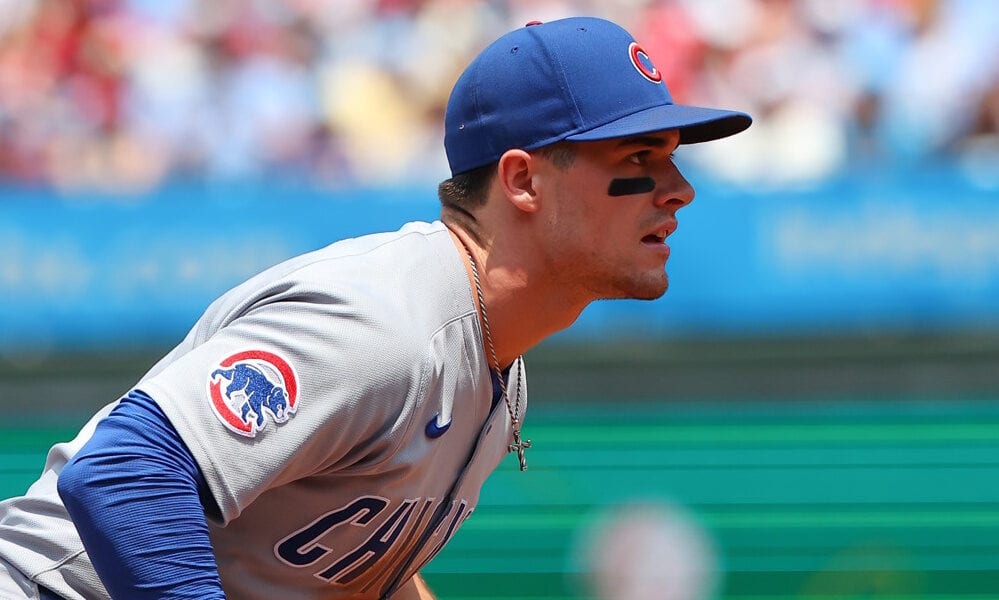
Matt Shaw (3B — CHC)
Matt Shaw had a rocky debut in 2025, quickly getting demoted to a month-long stint in Triple-A. He finished the first half of the season with a .556 OPS and a batting average below the Mendoza Line. Shaw still managed 11 steals across those 232 plate appearances, but his two home runs left much to be desired on the power front.
But all that changed in the second half. Shaw made substantive mechanical tweaks during the All-Star break and began packing more punch at the plate. He improved his barrel rate more than twofold from 4.3% to 10.1%. Shaw also traded ground balls for fly balls and leaned into more pulled power. As a result, Shaw hit 11 of his 12 dingers in the second half and increased his home run to fly ball ratio by 14 points to 17.5%. His second-half breakout fueled a solid .258/.317/.522 slash line and a 130 wRC+ over 205 plate appearances.
Shaw displayed a strong plate approach throughout the minors, consistently posting double-digit walk rates with sub-20% strikeout rates. Assuming his second-half gains stick, he offers 20/20 upside with a plus batting average for 2026. Not too shabby for a player going just inside the top 200 this draft season.
Daylen Lile (OF — WAS)
Daylen Lile didn’t make much noise after his call-up at the end of May and quickly required a tune-up in the minors. His struggles left him with an uninspiring .234/.283/.351 slash line and 76 wRC+ over his first 33 games. But when the second half rolled around, Lile transformed into a hitting machine.
Coming out of the All-Star break, Lile racked up 70 hits across 210 at-bats, including 10 doubles and a league-leading 10 triples. He raised his already above-average line-drive rate from 23.2% to 30.1%, third-most among qualified hitters in that stretch. In addition to putting a bunch of balls in play, Lile flexed some power. His ISO jumped from .117 to .243, and Lile tallied seven homers and five steals — with six of those long balls coming in September. Lile crushed the second half with a hefty .333 batting average, .956 OPS, and 162 wRC+ over 230 plate appearances.
Lile offers a little bit of everything — power, speed, and batting average. He makes a ton of contact and is one of the best at hitting the launch angle sweet spot. The Nationals aren’t the meatiest of offenses, but Lile finished 2025 as the team’s cleanup hitter and should bat in the heart of the order in 2026. Lile could wind up as one of the sneakier draft-day values this season.
Josh Bell (1B — MIN)
We usually don’t associate the term “second-half breakout” with 32-year-old veterans. But Josh Bell is worth highlighting for the strides he took in quality contact down the stretch in 2025. Most notably, Bell raised his barrel rate from 10.3% to 14.6% in the second half. He also upped his hard-hit rate by seven points to 51%. Bell’s second-half push in quality contact helped him finish the season with a 12% barrel rate and 47% hard-hit rate over 140 games — rates on par with 2019 when Bell smacked a career-high 37 homers.
The increased quality contact, in addition to strong plate skills throughout the season, beefed up Bell’s second-half slash line to .267/.353/.489 across 207 plate appearances — a far cry from his .219/.307/.372 line in the first half.
To be clear, we shouldn’t expect another 30+ home run season from Bell moving forward. If anything, his second-half breakout and underlying metrics demonstrate that the skills are still intact. While Bell won’t win your league for you, he offers stability and durability late in drafts. Pencil in 20 homers, a .250 batting average, and a bump in counting stats with Bell’s move to Minnesota.
Fantrax is one of the fastest-growing fantasy sites in the fantasy sports industry, and we’re not stopping anytime soon. We are the most customizable, easy-to-use, and feature-rich platform in the industry, offering the greatest fantasy experience for your dynasty, keeper, redraft, and best ball leagues. Fantasy sports doesn’t sleep, and neither does Fantrax, with seasons running 365 days a year. Take your fantasy leagues to the next level now at Fantrax.com!