

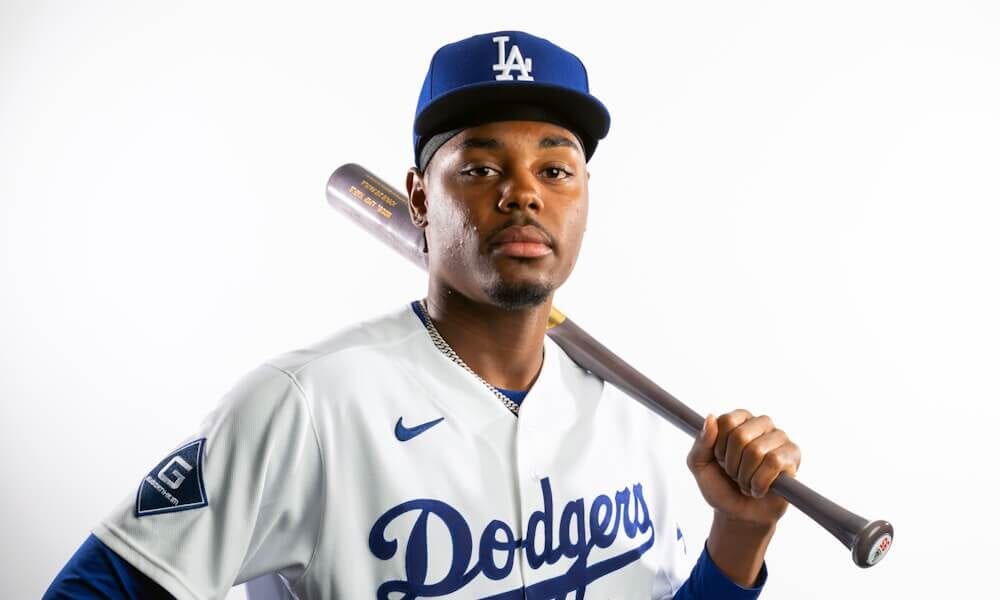
The Los Angeles Dodgers have spent more than a decade proving that sustained success isn’t accidental. While other organizations cycle between rebuilding and contention, Andrew Friedman and company have built a player development machine capable of replenishing their major league roster without sacrificing long-term competitiveness. For dynasty fantasy baseball managers, that consistency matters, and you’ll see it reflected in the Dodgers’ Top 20 prospects profiled ahead.
The Dodgers don’t simply identify talent—they maximize it.
DYNASTY BASEBALL: 2026 Los Angeles Dodgers Top 20 Fantasy Baseball Prospects
Hitters frequently arrive in the majors with advanced plate discipline, mature swing decisions, and an offensive approach that allows their physical tools to play. Pitchers often see meaningful gains in pitch design, command, and sequencing after entering the organization. It’s one of baseball’s strongest development environments, which is why Dodgers prospects often outperform their original scouting reports.
That success creates one unique challenge for dynasty managers.
The road to Los Angeles is rarely easy.
Unlike rebuilding clubs, the Dodgers don’t rush prospects into everyday roles. Young players must force their way onto one of baseball’s deepest rosters. While that can delay fantasy value in the short term, it often produces more polished major leaguers when opportunities finally arrive.
So, let’s begin with our countdown of the Dodgers’ top 20 prospects.
No. 20 — Kellon Lindsey | SS (ETA 2028)
Kellon Lindsey opens this list because he represents one of the Dodgers’ most intriguing long-term investments.
Few players in the system possess Lindsey’s athleticism. His first-step quickness impacts every aspect of his game, from his range at shortstop to the pressure he creates once he reaches base. While defense doesn’t score fantasy points, it often secures everyday playing time, and Lindsey’s glove gives him a legitimate chance to remain at shortstop long enough for the bat to develop.
The more important question is whether he can become a shortstop who hits around .270 while stealing 30 or more bases. If the answer is yes, dynasty managers will have one of the more valuable profiles in fantasy baseball.
No. 19 — Easton Shelton | 1B (ETA 2030)
First basemen don’t earn fantasy value with potential. They earn it with impact.
Unlike athletic middle infielders or center fielders, Shelton doesn’t have the luxury of creating value through speed or defensive versatility. At first base, the offensive bar is considerably higher, making one question more important than any other:
Can the bat carry the profile?
Shelton generates impressive leverage through the zone, producing the kind of natural loft that translates into extra-base power. More importantly, he isn’t simply trying to lift everything out of the ballpark. His best at-bats come when he lets the baseball travel, trusts his strength, and drives the middle of the field. That approach gives him a better chance to maintain a respectable batting average than many young power hitters who sell out for home runs.
The raw power is already evident. If the hit tool continues progressing, Shelton has the offensive upside to become an impact middle-of-the-order bat capable of outperforming his current ranking. Dynasty managers looking for affordable long-term power should pay attention before the production catches up to the tools.
No. 18 — Kendall George | OF (ETA 2028)
Game-changing speed is one of baseball’s rarest tools.
Kendall George possesses that kind of speed.
His athleticism immediately stands out, but what separates his long-term fantasy outlook is the opportunity to turn that speed into consistent production. Every improvement in his on-base ability creates another chance to impact a game, making his offensive development the key to unlocking his full fantasy value.
If he reaches base consistently, his legs can influence multiple categories. Stolen bases remain one of fantasy baseball’s scarcest resources, and players capable of stealing 40 or more bags can change the complexion of an entire roster
As he gains experience, the game is beginning to slow down for him. Better swing decisions and continued physical maturity should allow more of his natural athleticism to show up in games. If that progression continues, George has a realistic chance to develop into an everyday leadoff hitter whose fantasy value extends well beyond stolen bases.
No. 17 — Charles Davalan | OF (ETA 2028)
Davalan doesn’t overwhelm evaluators with elite raw power or blazing speed. Instead, he wins through advanced strike-zone awareness, quality contact, and a disciplined offensive approach. Those traits often age well because they’re built on repeatable skills rather than physical projection alone.
He rarely gives away at-bats, works deep counts, and shows the ability to use the entire field. That mature approach raises both his floor and his chances of becoming an everyday major leaguer.
The Dodgers have built an organizational philosophy around maximizing hitters with advanced approaches, and Davalan fits that mold exceptionally well. Continued physical development could unlock additional power, but even without a dramatic jump, his balanced offensive profile makes him a dependable long-term investment.
No. 16 — Chase Harlan | 3B (ETA 2030)
Few hitters in the Dodgers’ system possess Harlan’s natural strength. His bat speed and leverage generate easy power, giving him the type of offensive upside that can’t be taught. The focus now is turning that raw power into consistent game production, something that often separates intriguing prospects from middle-of-the-order run producers.
Rather than relying solely on strength, Harlan has shown improving swing decisions and a better understanding of which pitches he can drive. As that approach develops, more of his raw power should be translated into games. If the hit tool continues progressing alongside the power, he has the upside to become one of the more productive corner infielders in the organization.
The margin for error is smaller because so much of his fantasy value will come from the bat. But players capable of producing 30-home-run seasons are always valuable dynasty assets, and Harlan has the physical tools to reach that level if his offensive development stays on its current trajectory.
No. 15 — Tyler Gough | RHP (ETA 2028)
Gough already possesses the raw ingredients organizations covet: an explosive fastball, quality secondary pitches, and the ability to generate swings and misses. His athletic delivery provides optimism that continued mechanical refinement will lead to more consistent command, and few organizations have a stronger recent track record of helping talented arms take that next step.
Young power pitchers often need time to learn how to attack hitters, sequence pitches, and limit free passes. Those refinements frequently determine whether a prospect develops into a reliable starter or settles into a relief role. Gough has already shown encouraging progress, giving reason to believe there’s still another level of development ahead.
The combination of premium stuff and the Dodgers’ pitching development system creates a ceiling that’s difficult to ignore. While there’s more risk than with polished upper-level arms, the potential reward is substantial if his command continues trending in the right direction.
No. 14 — Joendry Vargas | SS (ETA 2029)
Young players are asked to compete against older, more experienced competition, making it easy to overlook long-term potential in favor of present-day production. Joendry Vargas is a reminder that dynasty managers are investing in future outcomes, not today’s stat lines.
Vargas already shows the traits organizations want to build around. He has a balanced offensive profile, advanced feel for the game, and enough athleticism to contribute in multiple fantasy categories. Rather than relying on one standout tool, he projects as the type of player who can provide steady production across the board – a profile that often becomes more valuable over time than prospects built around a single carrying tool.
As Vargas continues to mature physically, additional power should follow without sacrificing the contact ability that has become one of his strengths. Combined with his defensive ability at shortstop, that offensive growth creates a realistic path to everyday playing time and meaningful dynasty value. Patience will be required, but the foundation is already in place.
No. 13 — Ching-Hsien Ko | OF (ETA 2030)
While some young hitters rely on athleticism to overwhelm lower-level competition, Ko succeeds because he already understands the strike zone. He consistently works quality at-bats, refuses to chase pitches outside the zone, and puts himself in favorable counts. Those habits create a foundation that often translates well as prospects move through the minor leagues.
Ko has begun adding game power without sacrificing the contact ability that makes him so appealing. Instead of changing his swing to chase home runs, he’s allowing added strength and natural development to produce more impact. That combination of plate discipline, contact skills, and emerging power gives him one of the higher offensive floors in the Dodgers’ lower levels.
Prospects with advanced approaches don’t always generate the same excitement as elite athletes, but they frequently outperform expectations because their offensive foundation is already in place. If the power continues to develop, Ko has the potential to become a productive everyday outfielder capable of contributing in every offensive category while providing above-average on-base skills.
No. 12 — Cam Leiter | RHP (ETA 2029)
Every organization values power arms. The difference is finding pitchers who can pair premium stuff with enough command to remain in a starting rotation.
Cam Leiter has that opportunity.
When healthy, Leiter possesses one of the more electric arsenals in the Dodgers’ system. His fastball generates swings and misses, his secondary pitches give him multiple ways to attack hitters, and his overall repertoire reflects the traits teams look for in a high-impact starter. Durability has been the only obstacle standing between Leiter and a much higher ranking.
Leiter doesn’t need to reinvent himself—he simply needs consistent innings. As he continues building workload and refining his command, his stuff is good enough to miss bats at every level. The Dodgers have consistently helped talented pitchers maximize their arsenals, making Leiter an appealing long-term investment if he can stay on the mound.
Pitchers with legitimate strikeout potential are increasingly valuable, and Leiter has the repertoire to become more than just a dependable rotation piece. If health cooperates, he has the ceiling to develop into one of the organization’s better fantasy starters.
No. 11 — Jackson Ferris | LHP (ETA 2027)
Not every successful pitcher dominates with overpowering velocity.
Some separate themselves through command, pitchability, and the ability to make consistent adjustments. Jackson Ferris fits that mold, making him one of the safer pitching investments in the Dodgers’ system.
Ferris doesn’t rely on one overwhelming pitch. Instead, he succeeds with a complete arsenal, improving command, and an advanced understanding of how to attack hitters. He works efficiently, sequences pitches well, and consistently puts himself in favorable counts. Those traits often translate into durable major league starters capable of providing quality innings year after year.
Continued refinement of his secondary pitches could elevate him even further, but his path to major league success already appears well defined.
The Dodgers have consistently helped pitchers maximize their strengths rather than forcing them into one mold, and Ferris is well positioned to benefit from that philosophy. His combination of polish, command, and projection gives him one of the better long-term outlooks among the organization’s young arms.
No. 10 — Oliver Gonzalez | RHP (ETA 2030)
Prospect rankings often reward loud tools.
Player development rewards pitchers who learn how to use them.
That’s what makes Oliver Gonzalez one of the more intriguing arms in the Dodgers’ system. His rise hasn’t been driven by a dramatic jump in velocity or one new pitch. Instead, it’s come from steady refinement, better command, improved sequencing, and a growing understanding of how to attack hitters. Those improvements often prove more sustainable than raw stuff alone.
Rather than relying on pure velocity, he now works with greater confidence throughout his arsenal, changing speeds effectively and consistently putting hitters into unfavorable counts. That evolution has raised both his floor and his ceiling, giving evaluators increasing confidence that he can remain in a major league rotation instead of ultimately moving to the bullpen.
Starting pitchers who combine improving command with legitimate strikeout ability often see their value climb quickly as they move through the upper minors. Gonzalez still has development ahead of him, but the trajectory is encouraging. Continued refinement could turn him into one of the better value-pitching prospects in the organization, particularly for managers willing to invest before broader recognition catches up.
No. 9 — Bo Lowrance | 3B (ETA 2030)
Raw power is one of baseball’s rarest commodities.
Bo Lowrance has plenty of it.
The challenge isn’t generating power; it’s consistently translating that power into game production. Lowrance possesses the bat speed and natural strength to drive baseballs with authority to all fields. As his offensive approach continues to mature, more of that raw ability should show up where it matters most: in the box score.
What’s encouraging is the progress he’s made as a hitter. Improved swing decisions and a more disciplined approach have allowed him to access his power without sacrificing as much contact. That development is critical because middle-of-the-order hitters succeed by consistently getting into favorable counts and attacking pitches they can drive. Lowrance is moving in that direction.
Like many young power hitters, his long-term value depends on the continued development of the hit tool. But prospects capable of producing 30-home-run seasons are always worth paying attention to, particularly when they begin showing meaningful progress in their overall offensive game. If those gains continue, Lowrance has the upside to become one of the better power bats in the Dodgers’ system.
No. 8 — Adam Serwinowski | LHP (ETA 2027)
Serwinowski combines a polished pitch mix with the projection scouts look for in young starters. His fastball plays better than its velocity suggests because of its life through the zone, and his secondary pitches continue to improve as he gains experience. More importantly, he has shown encouraging progress with his command, allowing his entire arsenal to work more effectively.
Rather than relying on one dominant pitch, he attacks hitters with multiple weapons, giving him a better chance to remain in a starting rotation over the long term. That versatility not only raises his floor but also leaves room for additional growth as his physical development continues. Few organizations maximize pitchers with this type of foundation better than the Dodgers.
He may never produce the headlines generated by higher-velocity arms, but pitchers who consistently throw quality strikes, miss bats, and work deep into games become valuable dynasty assets. If his command continues improving, he has the ingredients to develop into one of the better left-handed starters in the organization.
No. 7 — Zach Ehrhard | OF (ETA 2028)
He may not possess the loudest raw power or the fastest sprint speed in the Dodgers’ system, but Zach Ehrhard’s balanced skill set gives him one of the highest floors among the organization’s position players. Ehrhard consistently controls the strike zone, makes quality contact, and has shown steady improvement as he continues adding strength. That well-rounded profile makes him one of the safer long-term dynasty investments in the system.
As his physical maturity has increased, so has his ability to impact the baseball. The developing power complements an already disciplined approach, giving him legitimate five-category potential without requiring one tool to carry the entire profile. Players with this combination of balance and consistency often outperform prospects whose value depends on one elite skill.
There are fewer questions surrounding his offensive foundation than many prospects ranked nearby. While others may offer a slightly higher ceiling, Ehrhard provides an outstanding combination of upside and reliability, making him the type of player championship-caliber dynasty rosters are built around.
No. 6 — Christian Zazueta | RHP (ETA 2028)
Few arms in the Dodgers’ system have improved their stock as dramatically as Christian Zazueta. Better command, increased confidence, and an arsenal capable of generating consistent swings and misses have transformed him from an intriguing prospect into one of the organization’s premier pitching investments. The raw stuff was always there. Now the execution is beginning to match it.
Rather than relying solely on velocity, Zazueta has become more comfortable working through his entire arsenal. He sequences pitches more effectively, limits hard contact, and consistently puts himself in favorable counts. Those refinements have significantly raised both his floor and his long-term ceiling, giving evaluators increasing confidence that he can remain a high-impact starter.
For dynasty managers, this is exactly the type of pitcher worth targeting before the broader market fully adjusts.
Strikeout upside has always driven fantasy value, and Zazueta possesses the repertoire to become one of the better strikeout arms in the Dodgers’ system. If his command continues progressing at its current pace, he has every opportunity to develop into a frontline fantasy starter.
No. 5 — James Tibbs III | OF (ETA 2027)
While many young hitters climb prospect rankings because of physical tools that may eventually develop, James Tibbs has consistently demonstrated the offensive foundation needed to become an everyday major leaguer. His disciplined approach, mature strike-zone awareness, and ability to produce quality at-bats give him one of the highest floors in the Dodgers’ system.
Tibbs doesn’t sacrifice contact to access power, nor does he rely on one carrying tool. He controls the strike zone exceptionally well, consistently works himself into favorable counts, and drives the baseball with authority to all fields. That approach not only raises his batting-average floor but also gives him the opportunity to become a reliable middle-of-the-order run producer.
Players with advanced offensive approaches often move more quickly because their skills translate against better competition. As he continues refining his power, there’s legitimate reason to believe he’ll become an impact fantasy outfielder capable of contributing across multiple categories while providing the consistency dynasty managers value over the course of a long season.
No. 4 — Mike Sirota | OF (ETA 2027)
Mike Sirota has always possessed the physical tools to become an impact prospect. What has elevated him into the top tier of the Dodgers’ system is the steady development of his offensive game. His improved strike-zone awareness, more disciplined approach, and growing ability to consistently impact the baseball have transformed him from an exciting athlete into one of the organization’s most complete position players.
Sirota is making better swing decisions, producing more consistent quality contact, and allowing his natural strength to translate into game power without sacrificing athleticism. That combination creates legitimate five-category upside—a profile that is increasingly difficult to find in dynasty baseball. Rather than relying on one standout tool, he projects to contribute across the board while continuing to refine the areas that once limited his ceiling.
Players with his combination of athleticism, offensive polish, and developmental momentum often experience rapid increases in value as they climb the minor league ladder. The foundation is already in place, and there is still room for additional growth. If his current trajectory continues, he has the potential to become one of the premier fantasy outfielders to emerge from the Dodgers’ system in recent years.
No. 3 — Emil Morales | SS/3B (ETA 2030)
Few hitters in the Dodgers’ system possess Morales’ combination of raw power, bat speed, and offensive projection. The physical tools immediately stand out, but what has elevated his long-term outlook is the steady maturation of his approach at the plate. As his understanding of the strike zone continues to improve, more of his exceptional natural ability is beginning to translate into game production.
Morales has shown an increasing willingness to let the game come to him rather than forcing the action. Better swing decisions, improved pitch recognition, and growing confidence in using the entire field have significantly raised both his floor and his ceiling. Instead of projecting as a boom-or-bust slugger, he is developing into the type of complete hitter capable of anchoring the middle of a lineup for years.
Elite power will always attract attention, but hitters who combine that power with an improving hit tool are considerably more valuable. Morales still has development ahead of him, yet the trajectory points toward one of the highest offensive ceilings anywhere in the Dodgers’ farm system. If he continues progressing at this pace, he has legitimate fantasy superstar potential.
No. 2 — Eduardo Quintero | OF (ETA 2028)
Five-category players are among the most valuable assets in dynasty baseball.
Few prospects in the Dodgers’ system fit that description better than Eduardo Quintero.
Quintero has steadily developed into one of the organization’s most complete position players by blending athleticism, improving plate discipline, emerging power, and impact speed into a well-rounded offensive profile. While the physical tools have always been evident, his continued growth as a hitter is what has elevated him into the elite tier of the Dodgers’ farm system.
Rather than relying solely on athletic ability, Quintero has become increasingly selective at the plate, showing better swing decisions and a greater willingness to work favorable counts. That approach allows every part of his game to play up. He reaches base more often, creates additional opportunities to use his speed, and continues unlocking more game power as he grows into his frame. The result is a profile capable of contributing across every major fantasy category.
Quintero offers impact without obvious weaknesses, giving him both an outstanding floor and one of the highest ceilings among Dodgers position prospects. His developmental trajectory suggests there’s still another level to reach, making him one of the organization’s premier long-term dynasty investments before his value fully reflects his talent.
No. 1 — Josue De Paula | OF (ETA 2027)
Every elite farm system has one prospect capable of changing the future of a franchise.
For the Dodgers, that player is Josue De Paula.
De Paula doesn’t top these rankings because of one extraordinary tool. He sits at No. 1 because he combines nearly every trait dynasty managers should value: elite plate discipline, advanced bat-to-ball skills, developing plus power, and the offensive maturity to maximize those tools against increasingly better competition. De Paula offers both an exceptionally high floor and legitimate superstar upside.
Josue consistently controls the strike zone beyond his years, rarely expands unnecessarily, and forces pitchers to work on his terms. That discipline creates a remarkably stable offensive foundation. As he continues adding strength and experience, his developing power should naturally emerge without compromising the contact skills that already make him one of the most complete young hitters in the minor leagues. Rather than projecting as a one-dimensional slugger, De Paula profiles as the type of hitter capable of impacting every offensive category while anchoring the middle of a lineup for years.
Elite hitters who combine patience, bat control, power projection, and athleticism are exceptionally rare. Those who develop within an organization as accomplished as the Dodgers become even more valuable. While patience will still be required before he reaches Los Angeles, every indicator points toward a player capable of becoming one of fantasy baseball’s premier young stars.
Fantrax is one of the fastest-growing fantasy sites in the fantasy sports industry, and we’re not stopping anytime soon. We are the most customizable, easy-to-use, and feature-rich platform in the industry, offering the greatest fantasy experience for your dynasty, keeper, redraft, and best ball leagues. Fantasy sports doesn’t sleep, and neither does Fantrax, with seasons running 365 days a year. Take your fantasy leagues to the next level now at Fantrax.com!