

Every fantasy baseball season has a defining moment when managers stop looking at the waiver wire and start looking toward Triple-A. The second half of the season is when organizations begin rewarding top prospects, contenders search for offensive sparks, and rebuilding clubs finally decide it’s time to see what the future looks like. Those promotions often decide fantasy championships.
The challenge isn’t identifying who the best prospects are. Every dynasty manager already knows the biggest names. The real advantage comes from recognizing which prospects have the talent to become fantasy stars and a realistic path to impacting your roster before your league mates react.
5 MLB Prospects Ready to Shape Your Fantasy Baseball Season
This series isn’t intended to mirror traditional prospect rankings. Defensive value, draft pedigree, and organizational prestige all matter in real baseball, but fantasy managers care about something different. We want players who can produce home runs, stolen bases, strikeouts, and batting average—not Gold Gloves.
These rankings blend upside, organizational context, developmental progress, and projected fantasy production. Some players may arrive later than others, but every prospect on this list has the tools to become a difference-maker once opportunity knocks.
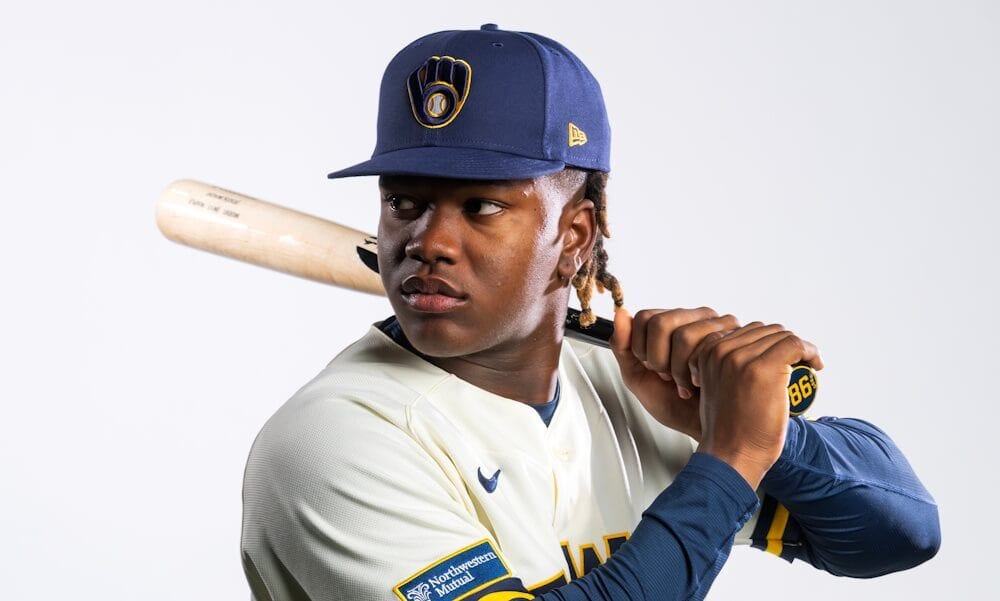
#1. Jesús Made | SS | Milwaukee Brewers
Previous Rank: NR
ETA: Late 2026
Why Fantasy Managers Should Care
If you were allowed to draft only one minor league hitter to build a dynasty roster around, Jesús Made would deserve serious consideration.
That statement isn’t based on one elite tool. In fact, that’s exactly what makes him unique.
Many top prospects lean heavily on one carrying skill. Some offer elite power but questionable contact ability. Others can steal bases but struggle to impact the baseball consistently. Made is different because nearly every part of his offensive profile projects to help fantasy managers.
His swing remains remarkably simple despite facing increasingly advanced pitching. He rarely appears rushed, recognizes breaking balls well beyond his years, and consistently puts together competitive at-bats. The result is a hitter capable of contributing in every offensive category instead of dominating just one.
Milwaukee has developed a reputation for resisting the temptation to rush elite prospects. That patience may frustrate redraft managers hoping for an immediate promotion, but it also increases confidence that Made will arrive fully prepared to handle major league pitching rather than learning on the job.
For dynasty managers, that’s exactly the profile worth investing in.
Scouting Breakdown
Hit Tool: 65/80
Made’s greatest strength isn’t raw bat speed—it’s timing.
He consistently gets his foot down early, allowing him to recognize pitches longer than most hitters his age. Because he stays balanced throughout his swing, he rarely has to cheat to catch premium velocity. That ability should translate into strong batting averages while keeping strikeout totals manageable.
A future .290 hitter isn’t an unrealistic expectation.
Power: 60/80
The power hasn’t completely arrived yet, but it’s coming.
Over the last year, Made has begun driving the baseball with much more authority without sacrificing contact quality. As he continues adding strength, evaluators expect those doubles to become home runs.
His peak seasons could comfortably settle in the 25-30 home run range.
Speed: 60/80
Made won’t lead the league in stolen bases, but he’s an efficient runner who understands game situations.
Rather than relying purely on speed, he reads pitchers well and consistently takes the extra base. Twenty stolen bases annually feels like a realistic baseline rather than an optimistic projection.
Defensive Outlook
Remaining at shortstop matters.
Not because fantasy baseball managers receive points for defense, but because staying at the position virtually guarantees everyday playing time while maintaining valuable positional eligibility.
Fantasy Outlook
Made checks every fantasy box.
Batting average.
Power.
Runs.
RBIs.
Stolen bases.
There simply aren’t many prospects capable of producing across all five categories without carrying significant downside. Even if his power develops more gradually than expected, his hit tool creates an unusually high fantasy floor.
That’s why he sits atop these rankings.
Rest-of-Season Projection (If Promoted)
- .278 AVG
- 6 HR
- 10 SB
- 30 RBI
- 34 Runs
Dynasty Value: ★★★★★
Fantasy Comparison
Imagine the offensive consistency of Francisco Lindor with a little more emphasis on batting average during his prime years. That isn’t a prediction of identical production, but it illustrates the type of balanced fantasy contributor Made could become.
#2. Leo De Vries | SS | Athletics
Previous Rank: NR
ETA: Late 2026
Why Fantasy Managers Should Care
Prospects with superstar ceilings are easy to identify.
Prospects with superstar ceilings and the ability to actually reach them are much harder to find.
Leo De Vries belongs in the second category.
Every season, one or two young players begin separating themselves from the rest of the minor leagues because everything starts clicking at once. Improved swing decisions lead to better contact. Better contact unlocks more power. Confidence follows, and suddenly a prospect who already possessed elite physical tools begins turning potential into production.
That’s where De Vries finds himself.
His development has been remarkably steady, particularly considering how young he has been at every stop. Rather than overwhelming lower-level pitching solely through athleticism, he’s shown the baseball instincts necessary to continue improving as the competition gets tougher.
That matters in fantasy because sustainable production almost always beats loud tools alone.
Scouting Breakdown
Hit Tool: 60/80
De Vries has developed into a mature hitter much faster than expected.
He tracks pitches well, rarely expands the strike zone unnecessarily, and already demonstrates the type of swing decisions usually associated with much older players.
His offensive approach should allow his power to play without sacrificing batting average.
Power: 65/80
The raw strength is impressive, but what stands out most is how naturally the ball carries off his bat.
He doesn’t need to overswing to generate home-run distance, which suggests even more power could arrive as he physically matures.
Thirty home runs annually is well within reach.
Speed: 65/80
Power often overshadows De Vries’ athleticism.
It shouldn’t.
His acceleration allows him to pressure defenses immediately after contact, while his instincts make him an efficient baserunner capable of contributing 25 or more steals during his best seasons.
Defensive Outlook
Every indication suggests he’ll remain at shortstop.
For fantasy managers, that’s another reason to dream on the profile. Offensive production at premium defensive positions creates enormous positional value.
Fantasy Outlook
Fantasy baseball increasingly rewards players who contribute everywhere.
De Vries projects to become exactly that.
He could eventually anchor fantasy rosters by producing above-average numbers in home runs, stolen bases, batting average, runs scored, and RBIs simultaneously.
That’s the profile of a perennial first-round fantasy talent.
Rest-of-Season Projection (If Promoted)
- .272 AVG
- 7 HR
- 11 SB
- 32 RBI
- 37 Runs
Dynasty Value: ★★★★★
Fantasy Comparison
Think of a young Carlos Correa’s offensive polish blended with the all-around athleticism that makes Bobby Witt Jr. such an elite fantasy player. De Vries isn’t either player, but his ceiling lives in that neighborhood if his development continues on its current trajectory.
#3. Kaelen Culpepper | SS | Minnesota Twins
Previous Rank: NR
ETA: Anytime
Why Fantasy Managers Should Care
Not every impact rookie arrives with superstar hype.
Some simply force their way onto a major league roster by doing one thing exceptionally well—hitting.
That’s been Kaelen Culpepper’s story since entering professional baseball.
While flashier prospects often grab headlines with towering home runs or elite sprint speeds, Culpepper has quietly built one of the most dependable offensive profiles in the minors. He doesn’t chase pitches outside the strike zone, rarely gives away an at-bat, and consistently puts pressure on opposing pitchers by making quality contact.
For fantasy managers, that consistency is incredibly valuable.
Prospects who rely on one carrying tool often struggle through lengthy adjustments once they reach the majors. Culpepper’s game is built on balance. His hit tool creates opportunities for his developing power, his athleticism keeps him relevant on the bases, and his defensive versatility gives Minnesota multiple ways to fit him into the lineup.
Opportunity matters just as much as talent.
The Twins don’t need Culpepper to become a superstar immediately. They simply need another productive everyday bat, and that’s exactly the type of role he appears ready to fill.
Scouting Breakdown
Hit Tool: 60/80
Everything starts with the bat.
Culpepper keeps his swing compact and under control, allowing him to stay through the baseball instead of trying to pull everything for power. That approach should help him avoid prolonged slumps against major league pitching.
Expect plenty of hard line drives rather than highlight-reel home runs.
Power: 55/80
His power has steadily improved as he’s matured physically.
Rather than projecting as a 35-home-run slugger, Culpepper looks more like a hitter capable of producing 20-25 home runs while maintaining a strong batting average. That’s a profile fantasy managers often underestimate.
Speed: 55/80
Speed won’t define his fantasy value, but it certainly enhances it.
He’s an intelligent baserunner who understands when to be aggressive. Fifteen to twenty stolen bases annually feel attainable without sacrificing offensive production.
Defensive Outlook
One of Culpepper’s biggest strengths isn’t measured in fantasy leagues.
His ability to play multiple infield positions dramatically increases his chances of receiving everyday playing time, especially during the stretch run when roster flexibility becomes increasingly valuable.
Fantasy Outlook
Fantasy championships aren’t always won by the player with the highest ceiling.
They’re often won by players who contribute in every category without creating weaknesses elsewhere.
That’s exactly why Culpepper ranks this highly.
He projects as the type of player who quietly finishes the season with contributions across all five offensive categories while producing a batting average that stabilizes fantasy lineups.
Rest-of-Season Projection (If Promoted)
- .274 AVG
- 7 HR
- 8 SB
- 35 RBI
- 38 Runs
Dynasty Value: ★★★★★
Fantasy Comparison
His overall fantasy profile resembles Dansby Swanson during his peak seasons—a player capable of helping everywhere without necessarily leading the league in one category.
#4. Walker Jenkins | OF | Minnesota Twins
Previous Rank: NR
ETA: Mid-to-Late 2026
Why Fantasy Managers Should Care
Every organization has one prospect who seems almost immune to concern.
For Minnesota, that’s Walker Jenkins.
Despite battling injuries during portions of his development, Jenkins has done nothing to diminish expectations. If anything, his ability to continue producing while refining his offensive approach has strengthened confidence that he’ll become an impact major league hitter.
Unlike many young sluggers, Jenkins doesn’t rely exclusively on raw athleticism.
He wins because he consistently makes the right decision.
He recognizes pitches early.
He refuses to chase outside the strike zone.
He understands how pitchers are trying to attack him.
Those are skills that tend to translate quickly once a player reaches the majors.
Fantasy managers often focus on home-run totals when evaluating prospects. Jenkins deserves attention for a different reason.
His offensive floor might be higher than anyone else on this list.
Scouting Breakdown
Hit Tool: 70/80
Few hitters in professional baseball consistently control an at-bat the way Jenkins does.
His swing stays remarkably direct through the hitting zone, allowing him to drive velocity while still adjusting to quality breaking pitches. That combination gives him legitimate batting-title upside.
Power: 60/80
The power continues to develop naturally.
Rather than selling out for loft, Jenkins trusts his swing, and the home runs are becoming a byproduct of consistently hard contact. Expect 25-30 home run potential as he reaches physical maturity.
Speed: 55/80
Although power draws most of the attention, Jenkins remains an above-average athlete.
His instincts allow him to contribute 15-20 stolen bases while adding extra value through aggressive baserunning.
Defensive Outlook
An athletic outfielder capable of remaining in center field or sliding comfortably into a corner spot if necessary.
Either way, the bat should keep him in the lineup every day.
Fantasy Outlook
Jenkins may never produce a 40-home-run season.
He probably won’t steal 40 bases.
But fantasy baseball isn’t always about finding one elite category.
It’s about accumulating value everywhere.
Jenkins projects as a player capable of hitting .290 with 25-plus home runs, double-digit steals, and enough run production to become a yearly fantasy cornerstone.
That’s an incredibly valuable profile.
Rest-of-Season Projection (If Promoted)
- .285 AVG
- 8 HR
- 6 SB
- 40 RBI
- 42 Runs
Dynasty Value: ★★★★★
Fantasy Comparison
His offensive profile brings to mind Kyle Tucker—not because they have identical tools, but because both players combine advanced plate discipline, consistent contact, and quietly above-average athleticism into one complete fantasy package.
#5. Charlie Condon | 1B/OF | Colorado Rockies
Previous Rank: NR
ETA: Anytime
Why Fantasy Managers Should Care
Power changes fantasy standings in a hurry, and few prospects possess more game-changing raw power than Charlie Condon.
Condon enters the second half of the season with perhaps the most fantasy-friendly environment of any hitter on this list. The combination of his natural strength and the possibility of calling Coors Field home creates enormous offensive upside. While there are more polished hitters in the minors, there aren’t many with Condon’s ability to alter a week’s worth of fantasy matchups with a handful of swings.
What has made his season particularly encouraging is that the improvements haven’t been limited to the box score. Earlier in his professional career, pitchers were able to exploit an aggressive approach by expanding the strike zone. Over the past several months, Condon has looked far more comfortable working counts, accepting walks, and waiting for pitches he can drive. That’s a significant step because major league pitchers rarely miss over the middle of the plate. The hitters who succeed are the ones who force mistakes.
Colorado’s long-term plans also work in his favor. The organization continues searching for middle-of-the-order production, and Condon has the offensive profile to become a foundational piece of that lineup. If he continues producing in Triple-A, the Rockies won’t have many reasons to keep him in the minors.
For fantasy baseball managers in need of home runs and RBIs, few prospects offer a higher immediate ceiling.
Scouting Breakdown
Hit Tool: 55/80
Condon isn’t expected to compete for batting titles, but the hit tool is better than many people realize. His swing has become more direct, and he’s beginning to trust his hands instead of trying to muscle every pitch out of the park. Continued improvements against quality breaking balls will determine whether he becomes a .250 hitter or settles closer to .270 during his prime.
Power: 70/80
This is the tool that makes fantasy managers excited.
Condon generates outstanding exit velocity with very little effort, and his natural loft produces home runs to every part of the field. Thirty-plus home runs annually is a realistic expectation if he develops as projected, and Coors Field could make those numbers even more impressive.
Speed: 40/80
Speed isn’t part of the fantasy package. Any stolen bases should be viewed as a bonus rather than an expectation.
Defensive Outlook
Condon’s ability to handle both first base and the corner outfield provides valuable roster flexibility for Colorado. Even if he isn’t an elite defender, the versatility should make it easier for the Rockies to keep his bat in the lineup on a daily basis.
Fantasy Outlook
Few prospects have a wider range of fantasy outcomes than Condon.
If the approach continues improving, he could develop into one of baseball’s premier power hitters. If swing-and-miss issues persist, there may be stretches where consistency becomes an issue. Fortunately for fantasy managers, home runs are one of the easiest tools to carry through developmental adjustments.
His upside is worth betting on.
Rest-of-Season Projection (If Promoted)
- .258 AVG
- 10 HR
- 1 SB
- 38 RBI
- 34 Runs
Dynasty Value: ★★★★☆
Fantasy Comparison
Condon profiles similarly to Christian Walker in terms of power production, but with the added fantasy advantage of playing half his games at Coors Field if he establishes himself in Colorado.
Final Fantasy Takeaways
Prospect rankings are valuable, but fantasy baseball is ultimately about timing.
Adding the right player a week early is often far more impactful than adding the consensus top prospect after everyone else has already submitted a waiver claim.
For managers focused on redraft leagues, Charlie Condon represents one of the most intriguing upside stashes because of his combination of power and potential opportunity. Kaelen Culpepper also deserves aggressive consideration thanks to his balanced offensive profile and clear path to everyday at-bats.
In keeper and dynasty leagues, Jesús Made and Leo De Vries remain the standard. Both possess legitimate five-category upside and project as franchise-caliber fantasy assets for years to come. Walker Jenkins belongs in that same conversation because of his polished offensive approach and remarkably high floor.
As the trade deadline approaches and organizations begin reshaping their rosters, expect these names to dominate prospect conversations. Staying ahead of those promotions could be the move that separates a playoff team from a championship roster.
Fantrax is one of the fastest-growing fantasy sites in the fantasy sports industry, and we’re not stopping anytime soon. We are the most customizable, easy-to-use, and feature-rich platform in the industry, offering the greatest fantasy experience for your dynasty, keeper, redraft, and best ball leagues. Fantasy sports doesn’t sleep, and neither does Fantrax, with seasons running 365 days a year. Take your fantasy leagues to the next level now at Fantrax.com!