

In fantasy baseball, championships are rarely won by chasing yesterday’s headlines.
They’re won by identifying tomorrow’s.
Every Major League Baseball Draft introduces a new wave of prospects into dynasty leagues. Owners rush to claim first-round selections, spend FAAB budgets on newly signed stars, and debate which teenager possesses the highest ceiling. Meanwhile, another group quietly fades into the background—the players who were drafted but never signed.
The Ones Who Walked Away: Why Logan Schmidt, Aidan Knaak and James Tronstein Could Become Tomorrow’s Biggest Draft Risers—and Today’s Smartest Dynasty Stashes
For most fantasy managers, those names disappear until the following draft cycle.
The sharpest dynasty owners know better.
Unsigned prospects often represent one of the market’s greatest inefficiencies. They aren’t appearing in affiliated box scores. They’re absent from most prospect rankings. Their names slowly drift out of everyday conversation.
But talent doesn’t disappear simply because a contract wasn’t signed.
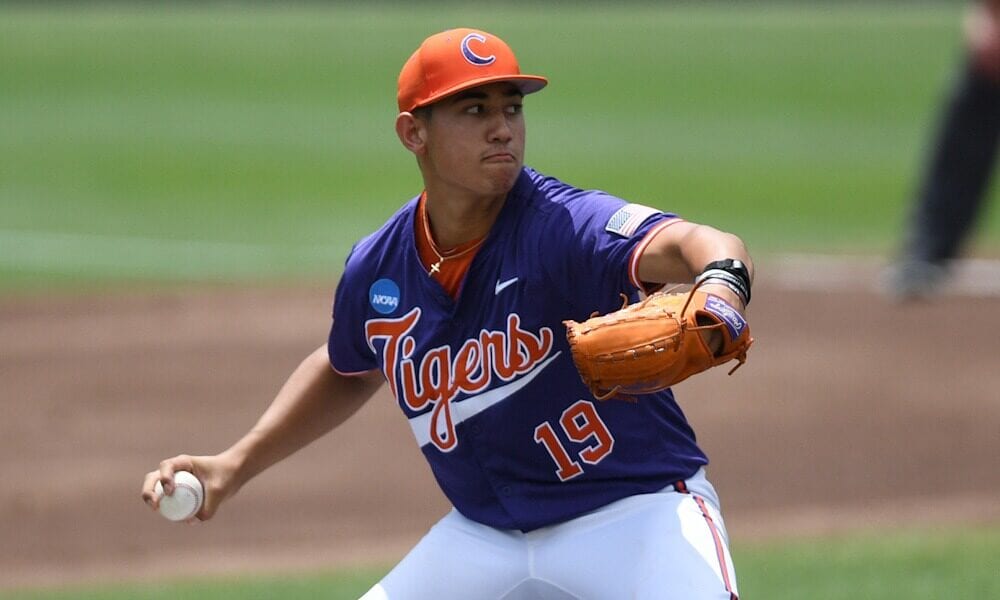
The 2026 MLB Draft produced three players whose decisions to return to school could ultimately prove more valuable than beginning their professional careers immediately: left-hander Logan Schmidt, Clemson right-hander Aidan Knaak, and California infielder James Tronstein.
Each chose development over immediacy.
Each believes another season—or several seasons—can elevate both his game and his professional future.
For dynasty managers, that creates an entirely different opportunity.
Rather than paying for established hype next year, the time to learn these names is now.
History has shown that players who bet on themselves sometimes return stronger, more polished, and dramatically more valuable than when they first entered the draft. While there are no guarantees in player development, these three prospects possess the combination of talent, athleticism, and developmental runway that makes them worthy of close attention.
If you’re searching for tomorrow’s risers before the rest of your league notices, this trio deserves a prominent place on your watch list.
Logan Schmidt
The Ace-Level Ceiling Everyone Will Be Watching
Drafted By: Cleveland Guardians
Round: 2nd
Overall Pick: No. 59
Among the unsigned players from the 2026 draft, no prospect carried more intrigue than Logan Schmidt.
The California left-hander entered the spring regarded as one of the premier prep pitchers available. Cleveland selected him in the second round, but his commitment to LSU and the inability to reach a signing agreement ultimately sent him to Baton Rouge instead.
What Cleveland Saw
Every organization has a developmental identity, and Cleveland has earned a reputation for investing in pitchers with athletic deliveries, repeatable mechanics, and room for long-term growth. Schmidt embodied each of those characteristics.
Rather than simply evaluating radar-gun readings, the Guardians likely viewed Schmidt as a pitcher whose best baseball still lies ahead. His age, physical projection, and ability to throw multiple pitches with confidence suggested a player who could continue improving as he matures. Those traits often provide player-development staffs with a strong foundation on which to build.
Selecting Schmidt in the second round reflected an investment in upside as much as present ability. Although the two sides were unable to finalize a contract, Cleveland’s decision underscored its belief that Schmidt possesses the ingredients to become a high-impact starting pitcher with continued refinement.
From a scouting perspective, Schmidt checks many of the boxes clubs seek in a modern starting pitcher. His athletic delivery creates both velocity and deception while allowing him to repeat his mechanics unusually well for a young power arm. His fastball already misses bats, his breaking ball flashes legitimate swing-and-miss potential, and his developing changeup hints at a complete starter’s arsenal.
Perhaps most encouraging is how much projection remains.
LSU has become one of college baseball’s premier environments for pitcher development. Facing Southeastern Conference hitters every weekend will challenge Schmidt against some of the nation’s best amateur competition while giving him access to elite coaching, advanced analytics, and elite training resources.
If he adds strength, continues refining his secondary pitches, and builds on his already impressive command, Schmidt could enter a future draft with even greater momentum than he carried into 2026.
Dynasty Angle
Schmidt isn’t a player to stash because success is guaranteed. He’s a player to know because premium left-handed starters with his combination of athleticism, projection, and pedigree often climb prospect rankings quickly when performance catches up with potential. If he flourishes at LSU, don’t be surprised if he becomes one of the most talked-about amateur pitchers in the country.
Aidan Knaak
The Proven Performer with Room to Climb
Drafted By: Milwaukee Brewers
Round: 5th
Overall Pick: No. 163
While Schmidt represents projection, Aidan Knaak offers something equally appealing: production.
The Clemson right-hander has already demonstrated that he can compete successfully against high-level college hitters, earning a fifth-round selection before electing to return for another season.
What Milwaukee Saw
Knaak entered the draft with something many amateur pitchers spend years trying to establish: a proven record of success against quality collegiate competition.
Milwaukee likely valued the combination of maturity, consistency, and competitive makeup he displayed throughout his time at Clemson. Rather than relying on one overpowering pitch, Knaak demonstrated an ability to adjust to hitters, execute a game plan, and keep his team in games. Those qualities often translate well within professional development systems.
The Brewers’ selection suggested confidence that additional refinement—whether through improved pitch efficiency, continued physical development, or incremental gains across his arsenal—could unlock another level in his game. Returning to Clemson now gives him another opportunity to prove that projection correct.
Knaak succeeds through polish as much as stuff. He works efficiently, commands multiple pitches, and consistently challenges hitters without giving away free bases. His changeup remains one of his defining weapons, while continued refinement of his breaking ball has expanded his ability to attack hitters from both sides of the plate.
Professional organizations value pitchers who repeatedly perform against elite competition, and another strong season in the ACC would only strengthen that résumé.
Dynasty Angle
Dynasty managers often gravitate toward the loudest radar-gun readings. Knaak’s appeal lies elsewhere. Experienced college starters who continue improving frequently rise quickly during the draft process because clubs trust both the performance and the track record. If his arsenal takes another step forward, don’t be surprised if his draft stock follows.
James Tronstein
The Athletic Position Player Who Could Surprise Everyone
Drafted By: Houston Astros
Round: 15th
Overall Pick: No. 451
Position players often require patience, and James Tronstein may reward it.
The California infielder entered the draft with a reputation for athleticism, defensive versatility, and a mature offensive approach. Houston selected him despite the challenge of signing him away from Vanderbilt, one of college baseball’s premier developmental programs.
What Houston Saw
Late-round selections frequently become opportunities to pursue high-upside talent, and Tronstein fit that profile.
Houston likely understood that signing him away from a prestigious college commitment would be difficult, yet the organization still chose to invest a draft pick because of the tools he already possessed. His athleticism, defensive flexibility, and balanced offensive approach offered the type of foundation that clubs believe can continue developing through experience and physical maturity.
Although he elected to attend Vanderbilt, Houston’s decision to draft him illustrated that the organization considered his long-term potential worth the risk. Players with his combination of baseball instincts and athletic ability often develop at different rates, and the Astros were willing to bet that his future value could eventually exceed his draft position.
Rather than rushing into professional baseball, Tronstein chose an environment where his game can continue evolving.
His offensive profile is built around quality at-bats. He controls the strike zone well, makes consistent contact, and uses the entire field instead of selling out for power. As he matures physically, additional impact could emerge naturally while preserving the approach that already separates him from many peers.
Defensively, his athleticism creates multiple paths to everyday value, another characteristic professional organizations appreciate.
Dynasty Angle
Every draft class includes hitters who make enormous jumps once added strength begins translating into game production. Tronstein has the foundation to become one of those players. If the power develops alongside his existing hit tool and defensive versatility, expect considerably more attention from both scouts and fantasy managers.
Final Thoughts: Buy the Talent Before the Buzz
One year from now, these names may no longer be hidden.
If Logan Schmidt dominates SEC hitters, if Aidan Knaak strings together another outstanding season at Clemson, or if James Tronstein flourishes against elite college competition, prospect rankings will adjust accordingly. So will dynasty rankings.
That doesn’t mean all three will become first-round picks. Player development is rarely predictable, and every prospect carries risk. But each has a realistic pathway to increasing his value through continued growth, experience, and performance.
For dynasty fantasy managers, that’s often where the edge begins—not by chasing players after everyone else believes, but by identifying them while they’re still overlooked.
The baseball world may have stopped talking about these three after the 2026 signing deadline.
Savvy dynasty owners probably shouldn’t.
Fantrax is one of the fastest-growing fantasy sites in the fantasy sports industry, and we’re not stopping anytime soon. We are the most customizable, easy-to-use, and feature-rich platform in the industry, offering the greatest fantasy experience for your dynasty, keeper, redraft, and best ball leagues. Fantasy sports doesn’t sleep, and neither does Fantrax, with seasons running 365 days a year. Take your fantasy leagues to the next level now at Fantrax.com!