

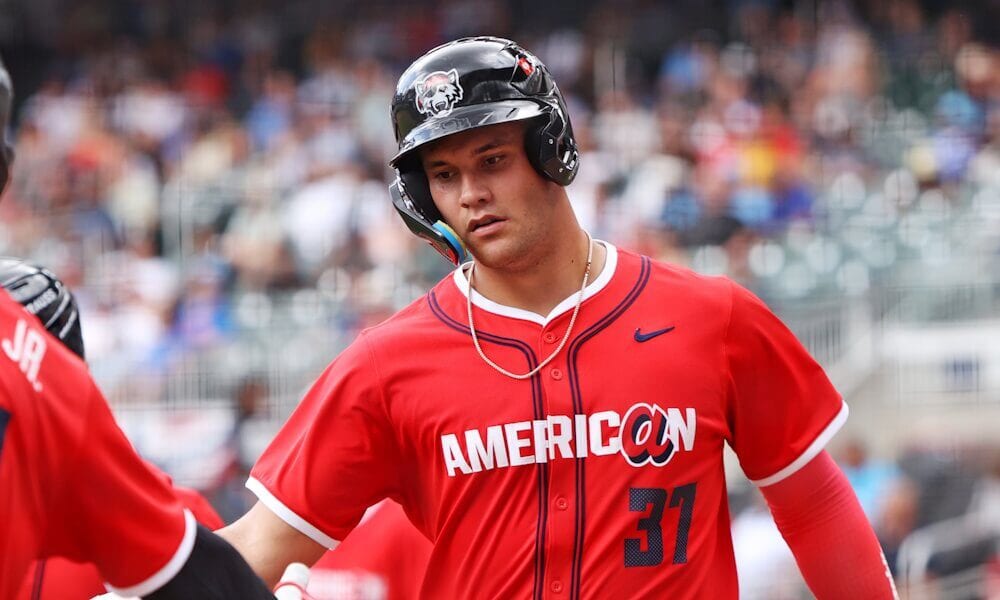
The Detroit Tigers have developed into one of baseball’s more compelling organizations under President of Baseball Operations Scott Harris and General Manager Jeff Greenberg. Rather than building solely around short-term major-league needs, Harris and Greenberg have emphasized creating a sustainable organization capable of identifying talent, developing it, and consistently supplying the major-league roster from within.
DYNASTY BASEBALL: 2026 Detroit Tigers Top 20 Fantasy Baseball Prospects
That philosophy has made player development an increasingly important part of Detroit’s identity. The Tigers have assembled a pipeline featuring young players with impact potential while continuing to invest in the infrastructure necessary to help prospects turn raw ability into major-league production. Detroit’s approach places value not simply on accumulating talent, but on creating an environment where players can continue improving after entering the organization, as you’ll see in the Tigers’ Top 20 fantasy baseball prospects profiled ahead.
For dynasty fantasy managers, that organizational direction matters. A productive farm system becomes considerably more valuable when the major-league club demonstrates a willingness to trust young players and provide legitimate opportunities when they are ready. Detroit offers that combination: prospects can develop without necessarily being rushed, but there is also a realistic pathway for talented players to earn meaningful roles in the majors.
Harris and Greenberg are ultimately building something larger than a collection of highly ranked prospects. The goal is a sustainable talent pipeline capable of supporting a competitive major-league roster year after year. This scenario makes Detroit an organization worth following closely—not only because of the prospects already attracting attention, but because the Tigers increasingly appear capable of developing the next wave behind them.
So, let’s begin with our countdown of the Tigers’ top 20 prospects.
#20 — Angel De Los Santos | SS (ETA 2030)
Detroit added De Los Santos through the 2025 international signing class, giving the organization another athletic young shortstop to develop. He remains a long-range projection play, but his youth gives him plenty of time to add strength and refine his offensive game.
For dynasty managers, De Los Santos is intriguing because of the potential combination of contact, speed, and eventual power. There isn’t one offensive tool that screams future fantasy star yet, so development over the next couple of seasons will be important.
He’s primarily a target for very deep dynasty leagues right now. A strong showing once he reaches more advanced competition could change that quickly, especially if added strength starts turning into extra-base power.
#19 — Manuel Bolivar | C (ETA 2031)
Bolivar entered the Tigers organization through the international amateur market, giving Detroit another extremely young catcher with offensive upside. He’s far enough away that his projection carries considerably more weight than his current statistical résumé.
Catchers are notoriously difficult to forecast this early, but that uncertainty also creates an opportunity in dynasty leagues. If Bolivar develops into an above-average hitter while remaining behind the plate, his positional value could eventually become substantial.
This is very much a patience play. Bolivar belongs on the radar in leagues with enormous farm systems, but managers in shallower formats can monitor his development until he begins establishing himself stateside.
#18 — Jesus Pinto | OF (ETA 2029)
Detroit landed Pinto through the international signing market, investing heavily in the Venezuelan outfielder’s offensive potential. Since entering professional baseball, he has begun turning some of that projection into production while moving through the lower levels.
Pinto’s dynasty appeal comes from the possibility of developing across several offensive categories. There’s enough bat speed and athleticism here to envision useful power without completely sacrificing average or speed.
He’s an appealing under-the-radar stash before the wider fantasy community catches up. Continued success against more advanced pitching could send Pinto climbing prospect rankings in a hurry.
#17 — Will Adams | 1B (ETA 2029)
The Tigers selected Adams in the 2026 MLB Draft, adding another young bat to an organization increasingly loaded with offensive talent. Because he’s primarily a first baseman, his path to dynasty relevance will depend heavily on how much damage he does at the plate.
That’s the challenge with this profile. Adams won’t receive much fantasy value simply from his defensive position, meaning he’ll need to develop substantial power while maintaining enough contact to become an everyday player.
He’s currently better suited for deeper dynasty formats than shallow leagues. If the home-run production begins arriving early in his professional career, though, Adams could become a fast riser.
#16 — Kelvis Salcedo | RHP (ETA 2028)
Detroit signed Salcedo out of Venezuela in 2023, and the young right-hander has developed into one of the more electric pitching projects in the system. His fastball velocity and ability to generate uncomfortable swings give him an enticing foundation.
Strikeouts are the primary attraction for dynasty managers. Salcedo possesses the raw arsenal to pile them up, but command remains important to determining whether those weapons eventually work in a starting rotation.
The bullpen risk shouldn’t be ignored, but neither should the upside. If his control takes a meaningful step forward, Salcedo could emerge as one of Detroit’s more valuable fantasy pitching prospects.
#15 — Malachi Witherspoon | RHP (ETA 2028)
Detroit selected Witherspoon in the second round of the 2025 MLB Draft, betting on a powerful right arm with considerable room for refinement. His breaking stuff gives him the potential to miss bats at a healthy rate.
For dynasty purposes, he’s an upside pitching investment rather than a high-floor option. Improved command will be essential because his ultimate fantasy value changes considerably depending on whether he starts or moves into relief.
The ingredients for a fantasy-relevant starter are present. Managers willing to tolerate pitching-prospect volatility should keep him rostered while Detroit works on turning his raw stuff into a more complete arsenal.
#14 — Franyerber Montilla | SS (ETA 2029)
The Tigers signed Montilla out of Venezuela in 2022, and the switch-hitting shortstop quickly became an interesting lower-level prospect before injuries disrupted his development. His athleticism and defensive ability still give him multiple avenues toward the majors.
Fantasy managers should be more interested in what happens offensively. Montilla has shown encouraging contact skills, but he’ll need either additional power or meaningful stolen-base production to develop into a significant dynasty asset.
Health is now an important part of the equation. If Montilla can finally string together healthy seasons, there’s still enough offensive potential for him to rebuild his prospect stock.
#13 — Michael Oliveto | C (ETA 2030)
Detroit selected Oliveto with the 34th overall pick in the 2025 MLB Draft, demonstrating how strongly the organization believed in his long-term potential. He’s a developmental catcher, but there’s enough offensive upside to make him interesting for fantasy.
The attraction is what happens if the bat develops while he remains behind the plate. Even moderate power and a quality approach can become extremely valuable at catcher because the offensive bar at the position is lower.
Oliveto still has considerable developmental work ahead, so patience is required. He’s a strong deep-dynasty stash whose value could jump once he starts producing over a full professional season.
#12 — Evan Dempsey | RHP (ETA 2029)
The Tigers selected Dempsey in the 2026 MLB Draft, adding another talented young arm to their pitching pipeline. His early appeal comes from having enough stuff and strike-throwing ability to project as a starter rather than immediately carrying a bullpen label.
That distinction matters in dynasty leagues. Starting pitchers capable of generating strikeouts while maintaining respectable ratios are difficult to find, and Dempsey has a developmental path toward that type of profile.
He’s still more projection than finished product, so don’t overpay yet. Once Dempsey begins accumulating professional innings, his strikeout and walk rates should tell us much more about his fantasy ceiling.
#11 — Brady Smith | RHP (ETA 2028)
Smith became a Tiger in the massive 2026 trade that sent Tarik Skubal to the Dodgers, arriving alongside Zyhir Hope and River Ryan. Detroit acquired a right-hander whose ability to miss bats immediately made him interesting in fantasy circles.
Strikeout upside drives Smith’s dynasty value. He has the weapons to overpower hitters, although improving his command and overall consistency will determine whether he reaches his ceiling as a starter.
There’s plenty of risk, but there’s also a path toward becoming a valuable fantasy rotation piece. Smith is exactly the kind of pitching prospect worth targeting before improved control potentially causes his value to spike.
#10 — Max Anderson | 2B (ETA 2026)
Detroit selected Anderson in the second round of the 2023 MLB Draft, and the former Nebraska standout has steadily worked his way toward the majors. He’s one of the safer offensive prospects on this list because his bat has continued producing as the competition has improved.
Anderson isn’t built around one enormous fantasy tool. Instead, his appeal comes from potentially contributing batting average, moderate power, and counting statistics without becoming a liability in any major offensive category.
His proximity makes him particularly attractive to contending dynasty teams. The ceiling may be more solid regular than superstar, but useful everyday middle infielders still carry considerable value in deeper leagues.
#9 — River Ryan | RHP (ETA 2026)
Detroit acquired Ryan from the Dodgers in the 2026 Tarik Skubal blockbuster, bringing in a pitcher who has already shown his arsenal can challenge major-league hitters. That makes him substantially different from most developmental arms on this countdown.
Ryan offers an attractive mixture of velocity, athleticism, and bat-missing stuff. For fantasy managers, the biggest question isn’t whether the arsenal can play—it’s whether he can remain healthy and accumulate enough innings after undergoing major elbow surgery.
That medical history adds significant risk, but his proximity offsets some of it. A healthy Ryan could settle into Detroit’s rotation relatively quickly and develop into a useful strikeout-producing SP3/SP4 with additional upside.
#8 — Ben Jacobs | LHP (ETA 2028)
The Tigers selected Jacobs in the third round of the 2025 MLB Draft, and the left-hander has quickly become one of the organization’s more interesting pitching-development stories. His ability to generate strikeouts has pushed him firmly onto the dynasty radar.
Jacobs is appealing because missing bats gives him a legitimate fantasy carrying tool. The next challenge is improving his command enough to work deeper into games without giving away unnecessary baserunners.
If that happens, his ceiling rises considerably. He’s one of my preferred pitching stashes in Detroit’s system because another developmental jump could turn him into a widely coveted dynasty arm.
#7 — Jordan Yost | SS (ETA 2029)
Detroit selected Yost in the first round of the 2025 MLB Draft, investing in an athletic high-school shortstop with an intriguing offensive foundation. His youth and defensive ability should give the Tigers plenty of patience while his bat develops.
Yost’s plate discipline and speed make him particularly interesting for fantasy. The major variable is power: if he grows into enough pop to reach double-digit or better home-run totals, his category profile becomes much more exciting.
There’s considerable development remaining, but that’s part of the attraction. Yost has the ingredients to become a player whose dynasty value increases significantly well before he reaches Detroit.
#6 — Cameron Flukey | RHP (ETA 2028)
Detroit made Flukey its first-round selection in the 2026 MLB Draft, adding a polished college right-hander to an already impressive collection of pitching prospects. His combination of stuff and strike-throwing gives him a reasonable chance to remain a starter.
That’s important for fantasy managers because Flukey isn’t dependent entirely on overpowering hitters. A deeper arsenal and dependable control could allow him to accumulate innings while still producing enough strikeouts to matter.
College pitchers can move rapidly when everything clicks, making Flukey an appealing medium-term investment. Health will be something to monitor, but his combination of ceiling and polish earns him a spot near the top of this list.
#5 — Kash Mayfield | LHP (ETA 2028)
Mayfield came to Detroit from the Padres in the 2026 Casey Mize trade, giving the Tigers a talented young left-hander with significant starting-pitcher upside. He’s one of the better combinations of youth and polish among Detroit’s pitching prospects.
Mayfield’s dynasty profile isn’t based solely on velocity. His secondary pitches and ability to locate give him multiple ways to retire hitters, increasing the likelihood that he eventually sticks in a major-league rotation.
He’s still a pitching prospect and therefore carries plenty of inherent risk, but the potential reward is substantial. Mayfield has the ingredients to eventually become a dependable fantasy starter who helps in both strikeouts and ratios.
#4 — Bryce Rainer | SS (ETA 2028)
The Tigers selected Rainer 11th overall in the 2024 MLB Draft out of Harvard-Westlake, securing one of the most physically gifted high-school players in his class. The left-handed-hitting shortstop brings size, athleticism, and legitimate power potential.
For dynasty managers, Rainer’s ceiling is enormous because power from the shortstop position can be a difference-maker. The concern is contact: swing-and-miss issues create a wider range of possible outcomes than his raw tools might suggest.
This is a ceiling-over-safety ranking. If Rainer tightens his approach and makes enough contact, he has the ingredients to become a 25-plus-homer fantasy shortstop with some stolen bases—a profile worth accepting considerable risk to chase.
#3 — Andrew Sears | LHP (ETA 2026 – Made MLB Debut)
Detroit found Sears in the 10th round of the 2023 MLB Draft, making his climb through the organization one of the better developmental stories in the system. The left-hander has advanced rapidly enough that his major-league opportunity is no longer far away.
Sears brings less superstar projection than the two hitters ahead of him, but proximity matters in dynasty baseball. His ability to generate strikeouts while handling advanced competition gives him a realistic chance to provide useful fantasy innings.
He’s especially appealing for managers trying to win soon rather than waiting several seasons on teenage prospects. Sears projects more as a useful fantasy starter than an ace, but immediate rotation value can be extremely valuable in deeper leagues.
#2 — Zyhir Hope | OF (ETA 2027)
Hope became one of Detroit’s biggest prospect additions when the Tigers acquired him from the Dodgers in the 2026 Tarik Skubal trade. The athletic left-handed hitter brought a tantalizing combination of power, speed, and offensive upside into the organization.
Few players on this list offer a more exciting fantasy toolkit. Hope has the potential to contribute heavily in both home runs and stolen bases, giving him the type of multi-category ceiling dynasty managers should aggressively pursue.
There is still some swing-and-miss risk, preventing the profile from being completely safe. But if Hope’s hit tool continues progressing, he has a realistic path toward becoming a 20-25+ homer, 15-20+ steal outfielder during his prime.
#1 — Josue Briceño | 1B/C (ETA 2027)
Detroit signed Briceño out of Venezuela during the 2022 international signing period, and he has developed into one of the premier offensive talents in the Tigers organization. His combination of physical strength, hitting ability, and rapidly emerging power has separated him from most of his peers.
Briceño gets my No. 1 spot because his offensive ceiling is tailor-made for dynasty baseball. He has the potential to hit for both average and substantial home-run power, giving him a pathway toward becoming a legitimate middle-of-the-order fantasy bat.
The positional outcome could make things even more interesting. If Briceño retains catcher eligibility, his bat could make him exceptionally valuable at a thin fantasy position; even if he ultimately becomes a first baseman, the offensive upside is strong enough for him to remain my No. 1 Tigers dynasty prospect from this group.
Make sure to check out our 2026 MLB organizational Prospect Rankings!
Final Thoughts
Detroit’s system offers an appealing blend of proximity, upside, and depth for dynasty managers. Briceño and Hope provide legitimate impact ceilings, while players such as Sears, Rainer, Mayfield, and Flukey give the organization several additional paths to producing fantasy-relevant talent. Just as importantly, the depth extends well beyond the top names.
For dynasty managers, the takeaway is simple: Detroit is a system worth monitoring closely. The Tigers have both prospects who could help relatively soon and younger players whose values could rise considerably as they develop.
Fantrax is one of the fastest-growing fantasy sites in the fantasy sports industry, and we’re not stopping anytime soon. We are the most customizable, easy-to-use, and feature-rich platform in the industry, offering the greatest fantasy experience for your dynasty, keeper, redraft, and best ball leagues. Fantasy sports doesn’t sleep, and neither does Fantrax, with seasons running 365 days a year. Take your fantasy leagues to the next level now at Fantrax.com!